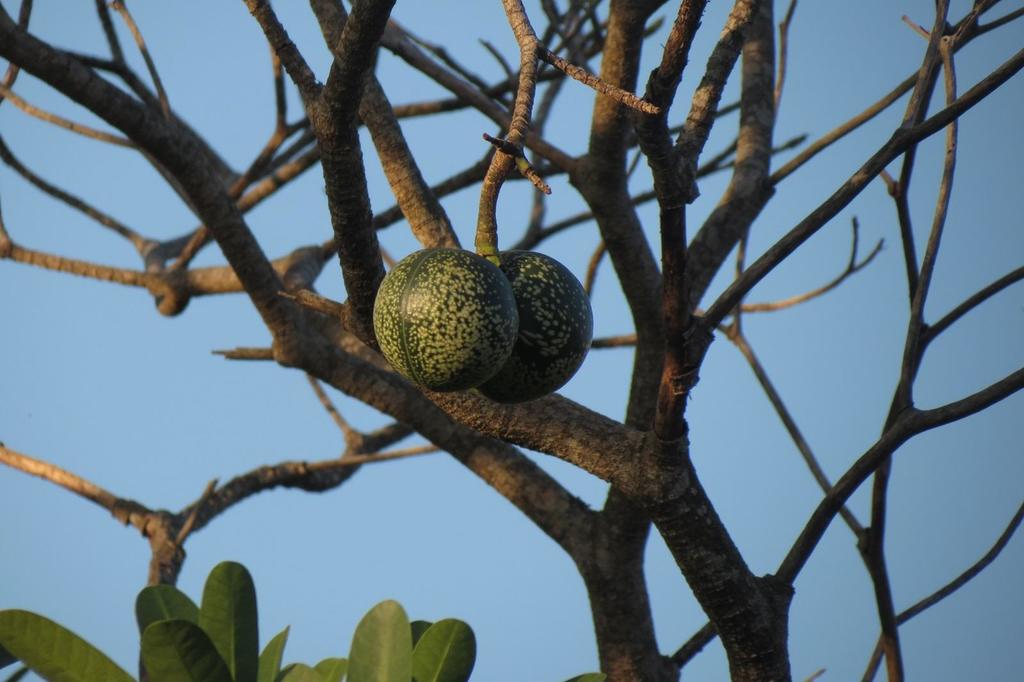
Voacanga thouarsii
- Origin
- Africa
- Part used
- See detailed notebook
- Tradition
- Traditional ethnobotany
A shrub of the savannas and forest edges of tropical Africa, Voacanga thouarsii belongs to the large Apocynaceae family, known for its powerful alkaloids. In southern and eastern African traditions, its bark and seeds held a place apart, reserved for the most experienced healers. Its use belongs more to a learned, ritual pharmacopoeia than to an everyday household remedy.
Traditional uses
Traditional remedy for nervous troubles
Root and trunk bark were used by certain traditional healers for their reported effects on agitation and nervous states, in very closely supervised settings.
Ceremonial and initiatory use
In several southern African societies, seeds and bark were used during rites of passage or ceremonies, linked to their recognized psychoactive properties.
External application on pain and wounds
Bark decoctions were sometimes applied externally to relieve muscle pain or promote wound healing, according to reported local practices.
Traditional use linked to fertility
Certain communities credited the bark with virtues related to female fertility, a documented but marginal and loosely formalized use.
Before you use it
A plant containing powerful indole alkaloids (voacangine, in particular) with marked effects on the central nervous system; any use not supervised by an experienced practitioner is discouraged. Contraindicated in pregnant or breastfeeding women, as well as children, due to the lack of safety data and the alkaloid profile. Risk of interactions with medication acting on the central nervous or cardiovascular system; medical advice is essential before any use. Never consume the seeds or bark without precise traditional preparation and the advice of a healthcare professional or qualified herbalist.
The detailed notebook
- Prepared as a paste or decoction
- Traditional duration of use
- Known contraindications
- Related species and their uses
Where to find it
Partner herbalists — available with the detailed notebook.
Sources
PFAF