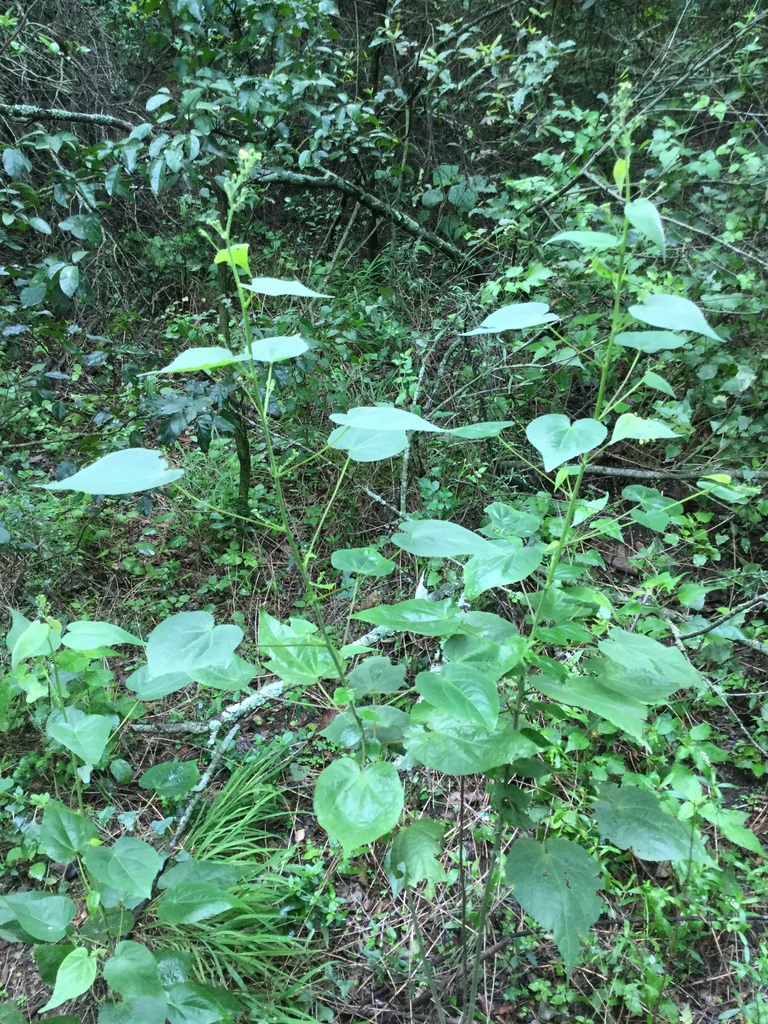
Wissadula amplissima
- Origin
- Africa
- Part used
- See detailed notebook
- Tradition
- Traditional ethnobotany
Unassuming among wild mallows, Wissadula amplissima grows along roadsides and fallow land in tropical regions, where traditional healers have long given it a modest but steady place. Its use, passed down orally through generations, remains today poorly documented by Western science, which calls for a cautious reading of its supposed virtues.
Traditional uses
Easing mild digestive troubles
The leaves were traditionally infused to accompany common digestive discomfort, in certain West African folk pharmacopoeias.
Care for skin irritation
Used externally, crushed or infused leaves were applied locally to irritated skin, according to reported folk uses.
Support during mild respiratory conditions
A leaf decoction was sometimes used in oral tradition to accompany coughing or a sore throat.
Before you use it
Traditional use is poorly documented scientifically: caution is warranted, particularly regarding the duration and frequency of use. Discouraged in pregnant or breastfeeding women, for lack of sufficient safety data. Do not use in children without the advice of a healthcare professional. It is recommended to consult a healthcare practitioner or qualified herbalist before any internal use.
The detailed notebook
- Prepared as a paste or decoction
- Traditional duration of use
- Known contraindications
- Related species and their uses
Where to find it
Partner herbalists — available with the detailed notebook.
Sources
Wikipedia