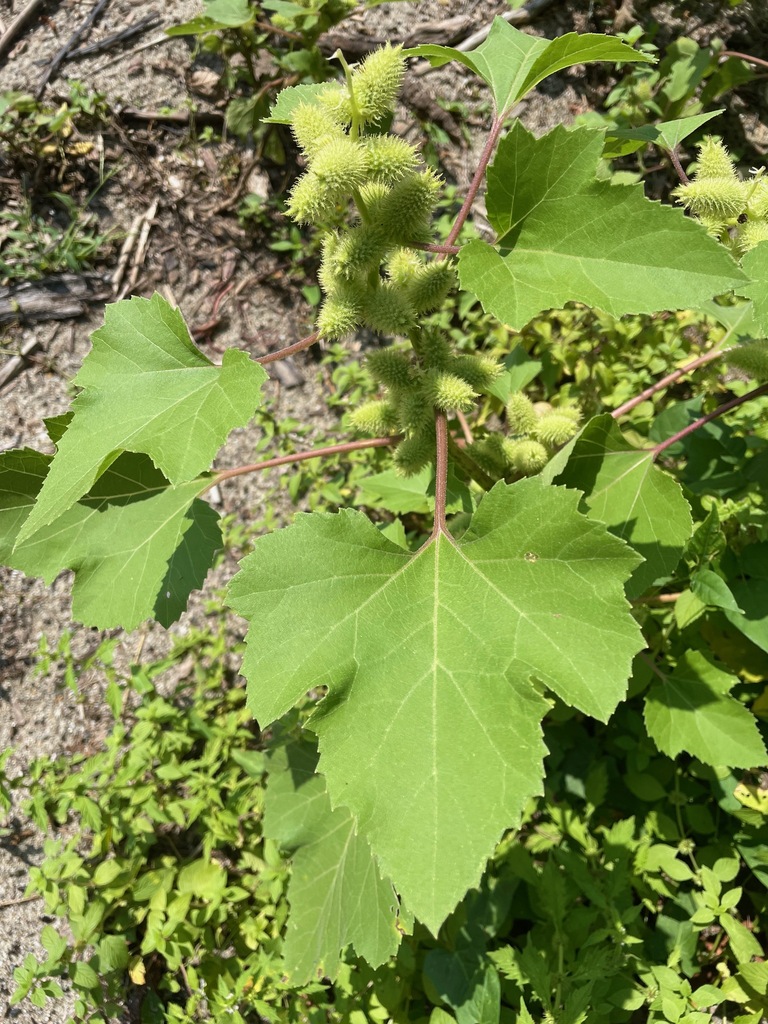
Xanthium
- Origin
- Asia
- Part used
- See detailed notebook
- Tradition
- Traditional ethnobotany
Xanthium, or cocklebur, is a weedy plant with spiny fruits that cling to fabric and fur, earning it many folk names across Asia and Europe. In traditional Chinese medicine, its dried fruit — called Cang Er Zi — has for centuries featured among the remedies intended to clear the nasal passages and combat so-called "wind-cold" ailments. This entry gathers the traditional uses reported about it, for purely historical and informational purposes.
Traditional uses
Clearing the nasal passages
Cocklebur fruit is traditionally used in China to relieve nasal congestion, sinusitis, and colds with discharge, as part of classical pharmacopeia.
Relief of rheumatic pain
Certain folk traditions attribute to the fruit, prepared as a decoction, virtues for relieving joint pain and feelings of heaviness linked to cold and dampness.
External use for skin conditions
In traditional external use, cocklebur-based preparations were used as a compress to soothe certain itching and skin irritation.
Traditional digestive support
In certain rural traditions, the plant was used with caution for its reported effects on minor digestive troubles, although this use is less documented than the preceding ones.
What to know before use
The raw fruit and young plant contain toxic substances (including carboxyatractyloside) that can cause serious liver damage; only fruit correctly dried and prepared according to traditional methods should be considered, and only under the guidance of a qualified professional. Formally not recommended for pregnant or breastfeeding women, as well as children, due to the lack of safety data and known toxic risks. Do not consume the seeds or young plants, which are reputed to be more toxic than the ripe, dried, and processed fruit. Medical advice or that of a qualified herbalist is essential before any internal use, particularly in cases of pre-existing liver disease or ongoing medication treatment.
The detailed notebook
- Prepared as a paste or decoction
- Traditional duration of use
- Known contraindications
- Related species and their uses
Where to find it
Partner herbalists — available with the detailed notebook.
Sources
PFAF, Wikipedia