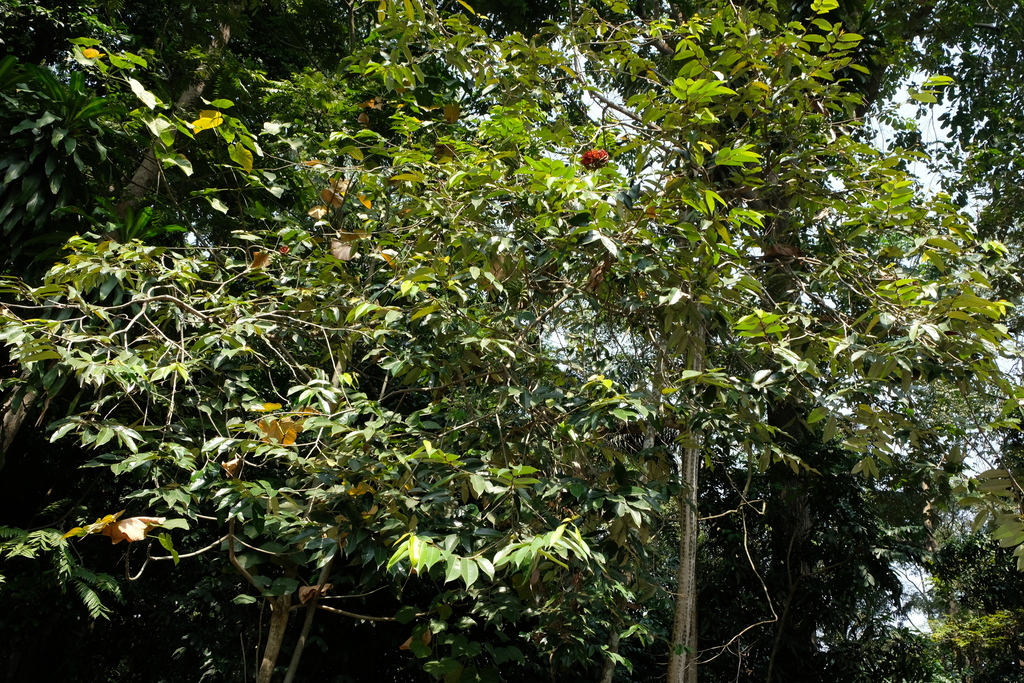
Guinea Pepper
- Origin
- Africa
- Part used
- See detailed notebook
- Tradition
- Traditional ethnobotany
Guinea pepper, or Xylopia aethiopica, is a tree of the humid forests of West and Central Africa whose spicy fruit has for generations flavored both kitchens and traditional remedies. Its bark, more discreet, likewise holds an old place in the region's folk pharmacopoeias, particularly to support digestion.
Traditional uses
Support for digestive comfort
The bark was traditionally prepared as a decoction to accompany difficult digestion and ease heaviness after meals.
Use against flatulence
In several West African traditions, the bark and fruit were used for their reputed ability to ease intestinal gas.
Accompanying colds
Bark or fruit preparations were drunk hot to accompany episodes of coughing or colds, according to local folk medicine.
Traditional tonic drink
The bark went into decoctions considered fortifying, drunk to support everyday vitality.
Before you use it
No solid scientific data confirms the traditional uses reported here: they belong to history and ethnobotany, not validated medicine. It is recommended to seek the advice of a healthcare professional before any prolonged use, particularly during pregnancy, breastfeeding, or ongoing medication. Respect moderate quantities, as the bark is little studied for its long-term effects. Avoid use in young children without specialist advice.
The detailed notebook
- Prepared as a paste or decoction
- Traditional duration of use
- Known contraindications
- Related species and their uses
Where to find it
Partner herbalists — available with the detailed notebook.
Sources
PFAF, Wikipedia