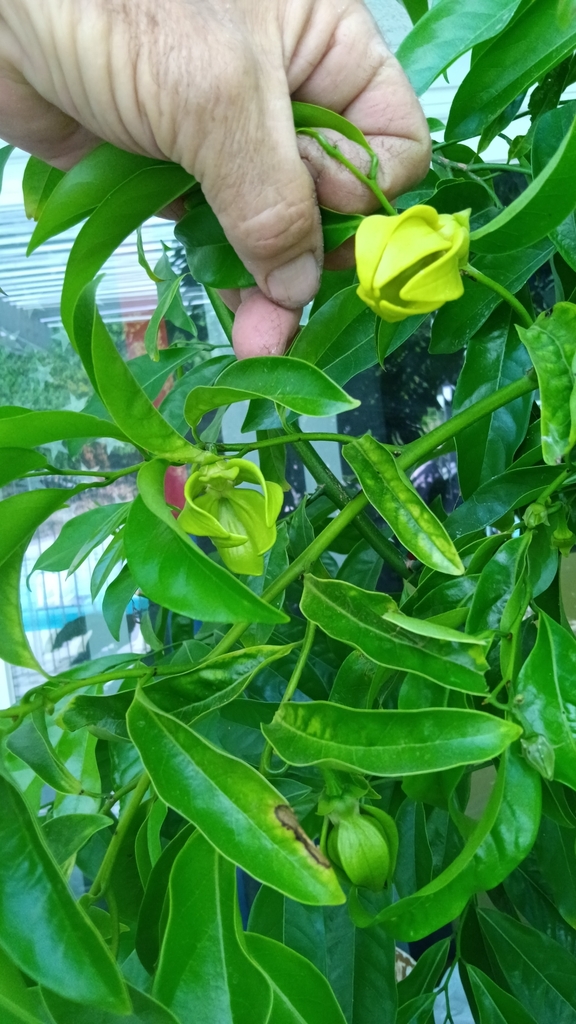
Ylang-ylang
- Origin
- Asia
- Part used
- Flowers, Seeds / fruit
- Tradition
- Traditional ethnobotany
Ylang-ylang, a tree with fragrant, star-shaped flowers, is native to the islands of Southeast Asia, particularly the Philippines, Indonesia, and the Comoros. For centuries, its flowers have been picked at dawn to extract a precious essence, used in local traditions for both body and mind. Its very name, coming from Tagalog, evokes the "flower of flowers," so highly was it prized in rituals of beauty and well-being.
Traditional uses
Calming and relaxation
Traditionally, ylang-ylang essential oil is diffused or inhaled to promote relaxation and soothe nervous tension, particularly in Balinese and Philippine uses.
Care for skin and hair
Flowers macerated in oil were used to scent and nourish the skin and hair, a practice still alive in the Pacific islands and Madagascar.
Support for inner harmony
Ylang-ylang has long been associated with ceremonial and sensory use, believed to promote a calm state of mind and an atmosphere conducive to serenity.
Support for heart rhythm
In certain aromatherapy traditions, ylang-ylang was used to help with sensations of stress-related palpitations, although this use remains empirical and poorly documented scientifically.
What to know before use
Ylang-ylang essential oil is highly concentrated and should never be applied undiluted to the skin without a carrier oil. Not recommended for pregnant or breastfeeding women, as well as young children, due to a lack of sufficient safety data. Prolonged or high-concentration use can cause headaches, nausea, or skin irritation in certain sensitive people. Seek advice from a health professional or qualified aromatherapist before any internal or prolonged use.
The detailed notebook
- Prepared as a paste or decoction
- Traditional duration of use
- Known contraindications
- Related species and their uses
Where to find it
Partner herbalists — available with the detailed notebook.
Sources
PFAF, Wikipedia