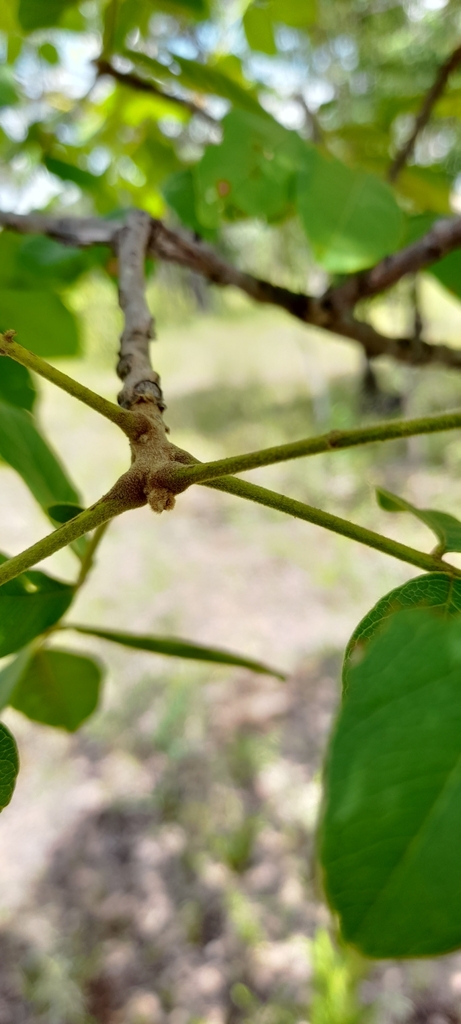
Zanha africana
- Origin
- Africa
- Part used
- See detailed notebook
- Tradition
- Traditional ethnobotany
A discreet tree of the savannas and open forests of eastern and southern Africa, Zanha africana has long been known to Bantu and East African traditional healers for the bark and roots of its gnarled trunk. In oral records passed down through generations, it is credited with virtues sometimes soothing, sometimes fortifying, depending on the region and local uses. Its vernacular name varies greatly from one ethnic group to another, a sign of an old and widespread use.
Traditional uses
Traditional support for stomach ache
The bark was traditionally prepared as a decoction to relieve common digestive troubles, particularly abdominal pain and temporary diarrhea reported in several East African communities.
Use against bodily pain
Roots and bark were used as a decoction or compress to soothe muscle and joint pain, according to practices reported among several southern African peoples.
Traditional fever remedy
Certain local herbalist traditions report a use of bark decoction to accompany feverish states, as general bodily support.
Traditional wound care
Crushed bark or a concentrated decoction is said to have been applied locally to wounds or skin irritation, according to uses reported in East African folk pharmacopoeia.
Before you use it
Traditional use is poorly documented scientifically: caution is warranted, particularly regarding the duration and repetition of doses. Do not use in pregnant or breastfeeding women, for lack of sufficient safety data. Avoid prolonged use without the advice of a healthcare professional or experienced traditional practitioner. Do not administer to young children without supervision, as traditional dosing is reserved for adults.
The detailed notebook
- Prepared as a paste or decoction
- Traditional duration of use
- Known contraindications
- Related species and their uses
Where to find it
Partner herbalists — available with the detailed notebook.
Sources
PFAF