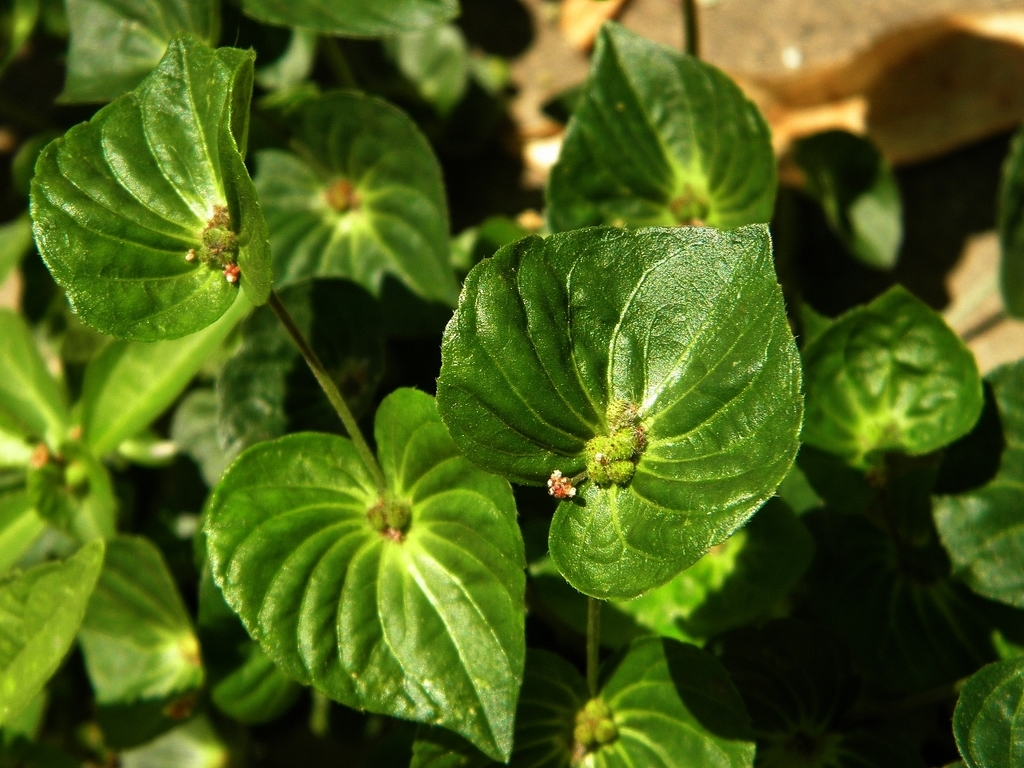
Acalypha indica
- Origin
- Asia
- Part used
- Leaves, Root
- Tradition
- Traditional ethnobotany
A modest herb of pathways and gardens in India, Acalypha indica has long held a place in the folk pharmacopeias of South Asia. Traditional Ayurvedic and Siddha practitioners named and used it for its leaves and root, in preparations intended for the skin, the respiratory tract, and digestive comfort. A common, unassuming plant, it has never left the notebooks of herbalists of the Indian subcontinent.
Traditional uses
Traditional care for skin conditions
The juice of fresh leaves was traditionally applied to the skin to soothe irritation, itching, and minor skin lesions in Indian folk medicine.
Traditional use against coughing
In South India, a leaf decoction was customarily used to relieve coughing and mild respiratory congestion.
Ancient use as a mild purgative
The root and sometimes the leaves were traditionally used in small quantity for their purgative and vermifuge properties recognized in Siddha pharmacopeia.
Traditional use reported in folk gynecology
Some local traditions report a use of the plant related to female cycles, a use that nonetheless remains poorly documented and should be regarded with great caution.
What to know before use
A plant to handle with caution: certain traditional uses (purgative, root) are associated with a risk of toxicity if quantities are not controlled. Not recommended for pregnant or breastfeeding women or young children, due to traditional uses touching on the female sphere and a lack of safety data. Do not use the root or internal preparations without the advice of a health professional or an experienced herbalist familiar with the plant. Avoid prolonged or repeated use without supervision, especially during ongoing medication treatment.
The detailed notebook
- Prepared as a paste or decoction
- Traditional duration of use
- Known contraindications
- Related species and their uses
Where to find it
Partner herbalists — available with the detailed notebook.
Sources
PFAF, Wikipedia