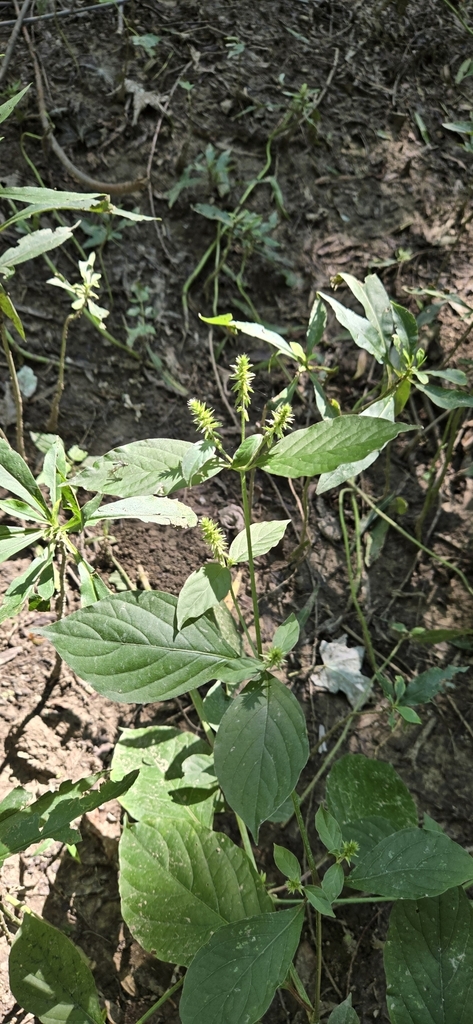
Achyranthes japonica
- Origin
- Asia
- Part used
- See detailed notebook
- Tradition
- Traditional ethnobotany
Known in East Asia as Niu Xi, Achyranthes japonica has held a discreet but constant place in traditional Chinese and Korean pharmacopeia for centuries. Its long, fibrous root was reputed to "bring down" stagnant energies in the body, according to the ancient theories of East Asian medicine. Traditional herbalists classified it among plants acting on the joints and blood circulation.
Traditional uses
Traditional joint support
The root was traditionally used to help with joint and lower-back pain, especially in the elderly, according to classic texts of Chinese medicine.
Promoting blood circulation
In the theory of traditional Asian medicine, this plant was said to "move the blood" and clear stasis, an ancient concept distinct from blood circulation in the modern sense.
Traditional gynecological use
The root was among the plants used empirically to help with menstrual troubles, a use now discouraged without supervision due to its potentially emmenagogue action.
Traditional support for the urinary tract
It was also cited in certain ancient writings to support urinary function, in combination with other plants of the local pharmacopeia.
What to know before use
Not recommended during pregnancy due to a traditional emmenagogue use and a suggested risk of uterine contractions. Not recommended for breastfeeding women, children, or in cases of coagulation disorders or anticoagulant treatment. Traditional use poorly documented outside East Asian pharmacopeia: it is essential to consult a health professional or qualified herbalist before any use. Avoid self-preparation from wild roots not identified with certainty, as related species can be confused with it.
The detailed notebook
- Prepared as a paste or decoction
- Traditional duration of use
- Known contraindications
- Related species and their uses
Where to find it
Partner herbalists — available with the detailed notebook.
Sources
PFAF