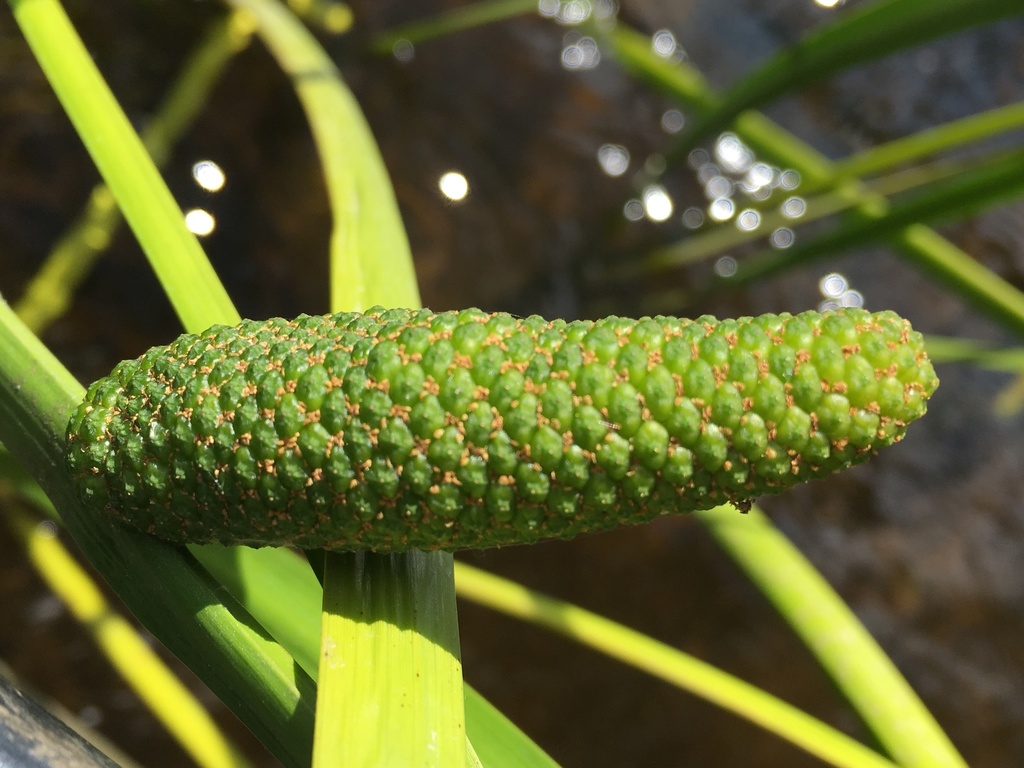
Sweet flag
- Origin
- North America
- Part used
- Root
- Tradition
- Traditional ethnobotany
Sweet flag, or aromatic reed, grows at the edge of calm North American waters, where Indigenous nations long credited it with digestive and fortifying properties. Its knotty root, with a spicy, slightly camphorous smell, held a prized place in traditional pharmacopoeias, chewed fresh from the ground or dried for winter. The old herbalists considered it a plant of vitality, though one to be handled with judgment.
Traditional uses
Support for difficult digestion
The root was traditionally chewed or infused to ease a heavy stomach and stimulate the appetite after a hearty meal.
Use for bloating
Some Native American traditions used the dried root as a mild decoction to relieve gas and digestive spasms.
A tonic, fortifying root
Chewing a small piece of root was a reported practice to support endurance and fight fatigue during long journeys.
Traditional support for the airways
The aromatic root was sometimes smoked or infused to clear the airways during winter ailments, according to certain traditional uses.
Before you use it
Sweet flag root contains beta-asarone, a compound whose toxicity and carcinogenic potential have been documented depending on the plant's variety and geographic origin; professional advice is essential before any internal use. Strictly discouraged during pregnancy and breastfeeding, as well as in children, because of the lack of safety data. Do not extend use beyond a few days without the advice of a health professional or an experienced herbalist. Some varieties of Acorus calamus (notably American tetraploid ones) are reputed to be lower in beta-asarone than Asian varieties, but this distinction cannot be verified without laboratory analysis; caution remains warranted.
The detailed notebook
- Prepared as a paste or decoction
- Traditional duration of use
- Known contraindications
- Related species and their uses
Where to find it
Partner herbalists — available with the detailed notebook.
Sources
PFAF, Wikipedia