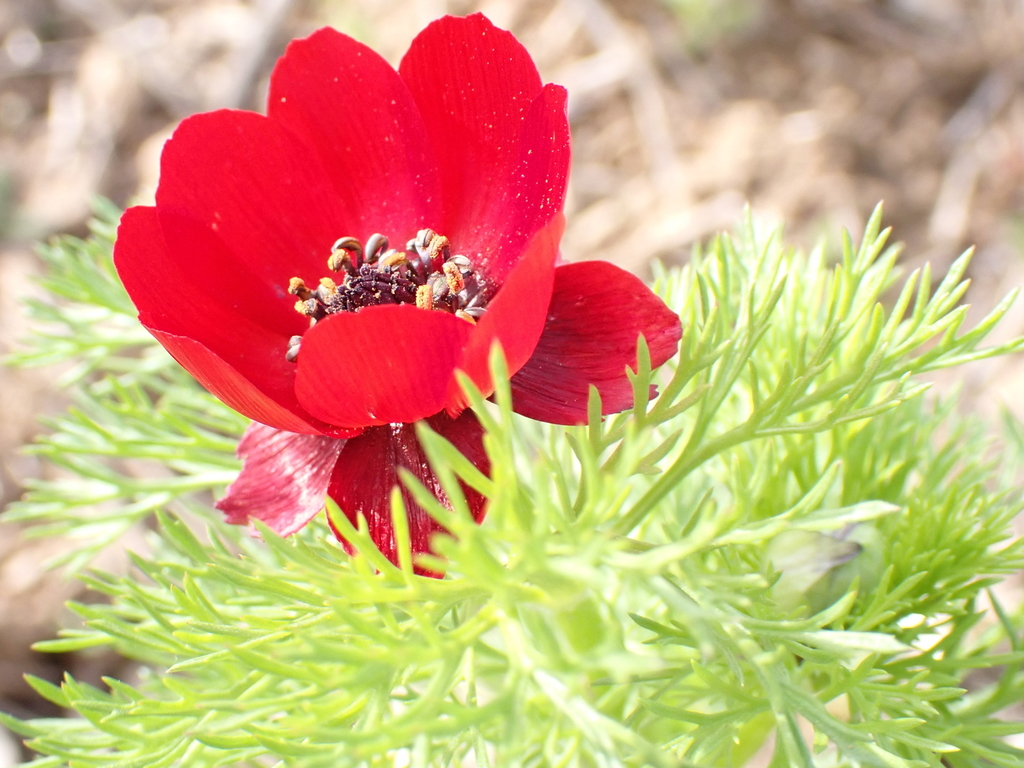
Adonis annua
- Origin
- Europe
- Part used
- See detailed notebook
- Tradition
- Traditional ethnobotany
Once called ‘pheasant's eye’ or ‘blood drop’ for its bright red petals, Adonis annua once adorned Europe's grain harvests. A legendary plant tied to the Greek myth of Adonis, it was more feared than used by folk herbalists, owing to its chemical kinship with the cardiotonic glycosides of foxglove.
Traditional uses
Traditional support for heart rhythm
In Russian and Eastern European folk medicine, the dried aerial part was used in very small amounts to support a heart considered ‘weak’ or irregular, in the manner of foxglove.
Old-time nervous calming
Some 19th-century herbalist notebooks mention a mild sedative use, often linked to its cardiac effect, to calm palpitations of nervous origin.
Water elimination
Adonis was among the plants traditionally associated with a diuretic effect, used alongside other plant cardiotonics in certain Russian folk pharmacopoeias.
Before you use it
A toxic plant containing cardiotonic glycosides similar to those of foxglove: never use without the supervision of a qualified healthcare professional. Contraindicated in pregnancy, breastfeeding, children, and anyone with heart conditions or on cardiotonic medication. Serious risk of interaction with heart treatments, diuretics, and certain medications (risk of accumulation and toxicity). Overdose can cause serious heart rhythm disturbances; any use must remain exceptional and strictly supervised.
The detailed notebook
- Prepared as a paste or decoction
- Traditional duration of use
- Known contraindications
- Related species and their uses
Where to find it
Partner herbalists — available with the detailed notebook.
Sources
PFAF