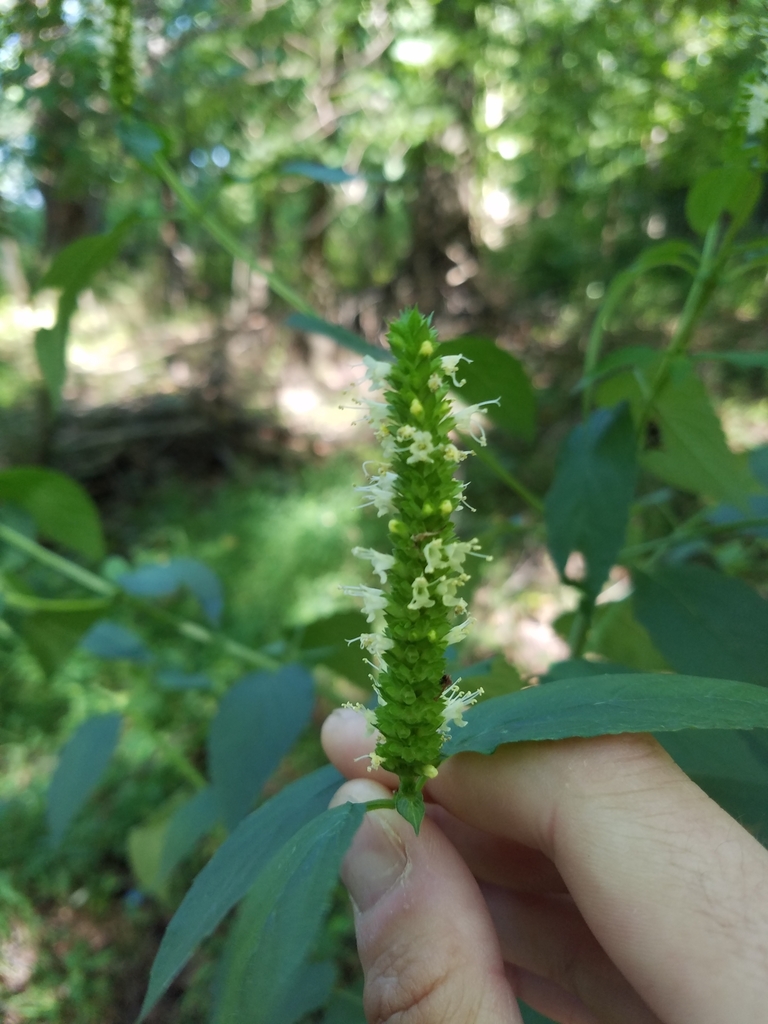
Agastache nepetoides
- Origin
- North America
- Part used
- See detailed notebook
- Tradition
- Traditional ethnobotany
A tall woodland mint forgotten by gardens, Agastache nepetoides once rose at the edges of North American forests, where the continent's early herbalists recognized it by its anise scent and its tall yellow-green spikes. Indigenous peoples, and the settlers who followed their teachings, made it a plant of everyday use, close in its properties to its cousins in the mint family.
Traditional uses
Support for digestion
Traditionally infused after meals, this aromatic plant was reputed to ease digestive heaviness and bloating, in the manner of related mints and agastaches.
Soothing for the airways
The infused leaves were sometimes used to help with mild colds and support clearer breathing, a use reported in North American botanical traditions.
A calming evening tea
Like many plants of the mint family, it was used as an evening tea to promote relaxation, though this use is not as well documented as for other agastaches.
Traditional external use
Compresses made from infused leaves were reportedly applied to minor skin irritation, according to loosely formalized folk uses.
Before you use it
The data available on this particular species remain limited: caution recommends favoring small amounts and carefully observing tolerance. As with any little-studied aromatic plant, prolonged or high-dose use is not recommended without the advice of a health professional. Discouraged for pregnant or breastfeeding women and young children, for lack of sufficient data. If undergoing medical treatment, seek the advice of a pharmacist or doctor before any regular use.
The detailed notebook
- Prepared as a paste or decoction
- Traditional duration of use
- Known contraindications
- Related species and their uses
Where to find it
Partner herbalists — available with the detailed notebook.
Sources
PFAF, Wikipedia