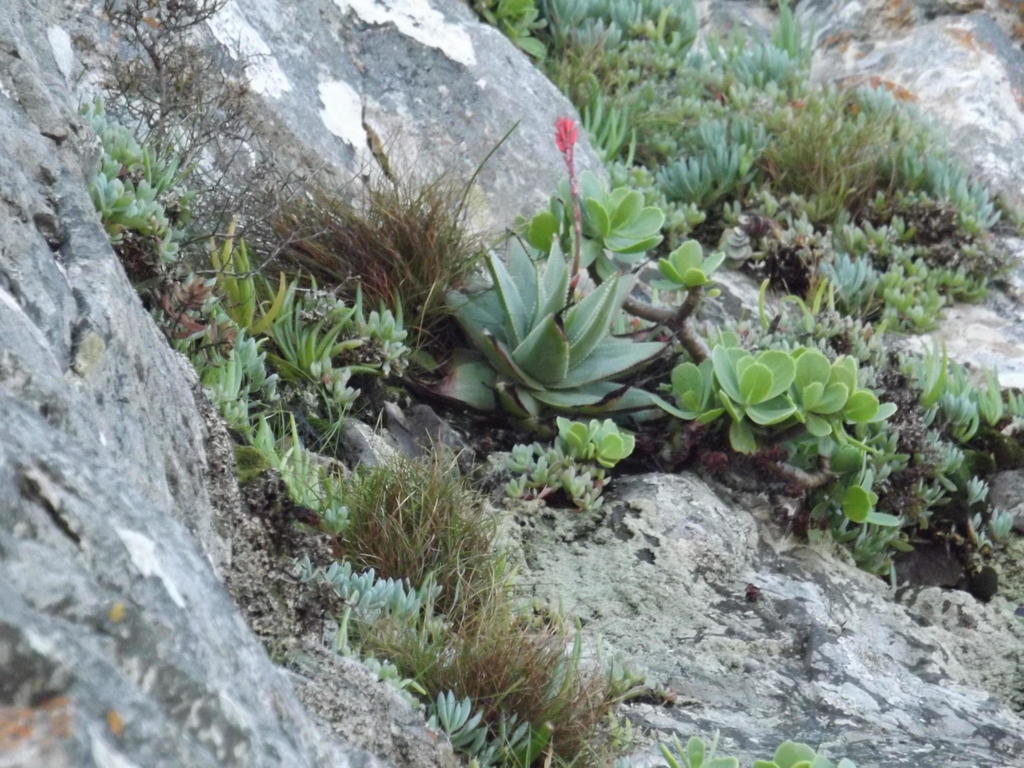
Aloe succotrina
- Origin
- Africa
- Part used
- See detailed notebook
- Tradition
- Traditional ethnobotany
Aloe succotrina, a purple aloe native to the mountainous regions of South Africa, was long confused in trade with the aloe of Socotra, from which it takes its name. Ancient herbalists prized its bitter resin, dried and exported for centuries along the trade routes of the Indian Ocean.
Traditional uses
A traditional bitter purgative
The dried resin of the aloe sap was traditionally used in very small amounts as a powerful purgative, like the other bitter aloes used since antiquity.
A soothing skin application
The fresh gel extracted from the leaves was applied locally to the skin, in South African tradition, to soothe minor irritation and superficial burns.
Care for minor wounds
Traditional healers used the fresh pulp as a poultice on minor cuts and stings, a practice common to several African aloe species.
A remedy for livestock
On certain farms in the Cape, the bitter sap was historically given in very small doses to animals for its supposed purgative properties.
What to know before use
The dried resin (bitter sap) is a powerful purgative whose dosage is delicate; inappropriate use can cause severe abdominal pain and severe diarrhea. Strictly not recommended for pregnant or breastfeeding women due to properties traditionally associated with stimulating effects on the uterus. Never use in children without the advice of a health professional. Prolonged or high-dose use is traditionally associated with intestinal irritation; the advice of a qualified professional is essential before any internal use.
The detailed notebook
- Prepared as a paste or decoction
- Traditional duration of use
- Known contraindications
- Related species and their uses
Where to find it
Partner herbalists — available with the detailed notebook.
Sources
PFAF