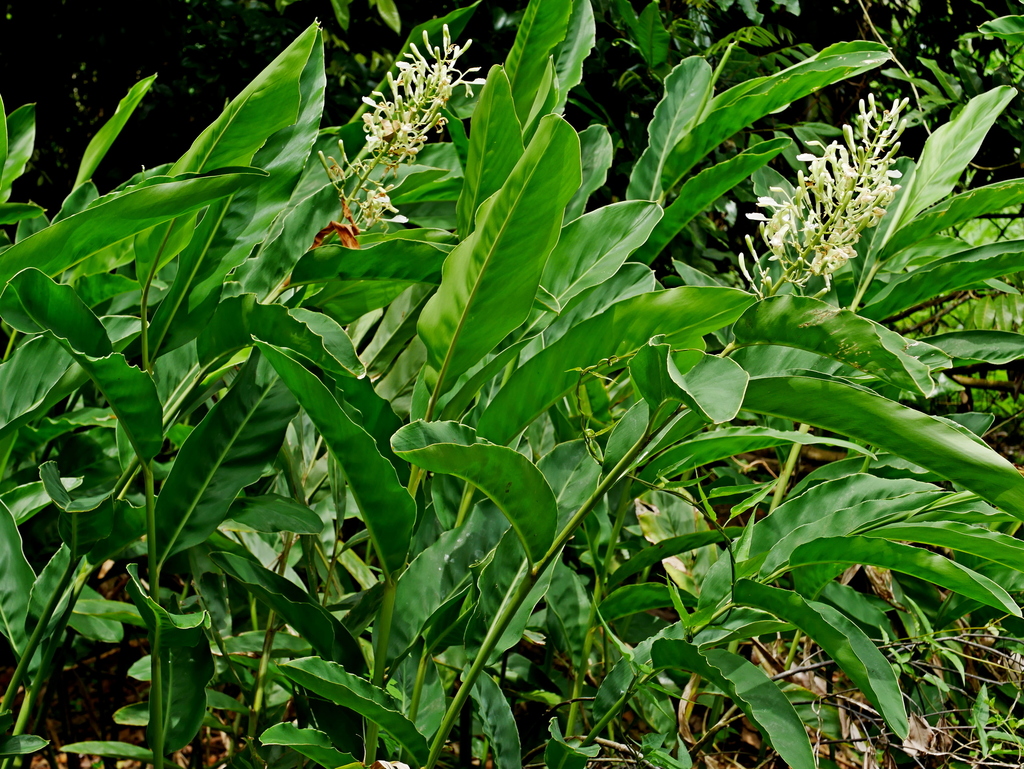
Alpinia galanga
- Origin
- Asia
- Part used
- See detailed notebook
- Tradition
- Traditional ethnobotany
Galangal, the fragrant rhizome of Southeast Asian kitchens and pharmacopeia, has accompanied Ayurvedic and traditional Indonesian, Malay, and Thai medicine for centuries. A cousin of ginger, it was once carried along the spice routes to medieval Europe, where it appeared in herbal treatises under the name "greater galangal."
Traditional uses
Traditional support for the respiratory tract
The rhizome was traditionally used in Southeast Asia to soothe the throat and help with colds, often as a hot decoction.
Digestive comfort after meals
Like other rhizomes in the ginger family, galangal has long been used to aid digestion and soothe bloating.
A tonic, warming rhizome
In traditional Indonesian (jamu) and Thai medicine, it is considered a "warming" plant, used to support general vitality.
Traditional use on the skin
The fresh or dried rhizome was sometimes applied locally as a paste in certain folk traditions for its purifying properties attributed to the skin.
What to know before use
Avoid use in pregnant or breastfeeding women, for lack of sufficient safety data. Consult a health professional before any prolonged use, especially if undergoing medication treatment (possible interactions with anticoagulants). Do not give to young children without the advice of a qualified professional. Stick to culinary or traditional doses; concentrated or prolonged use is not documented as safe.
The detailed notebook
- Prepared as a paste or decoction
- Traditional duration of use
- Known contraindications
- Related species and their uses
Where to find it
Partner herbalists — available with the detailed notebook.
Sources
PFAF, Wikipedia