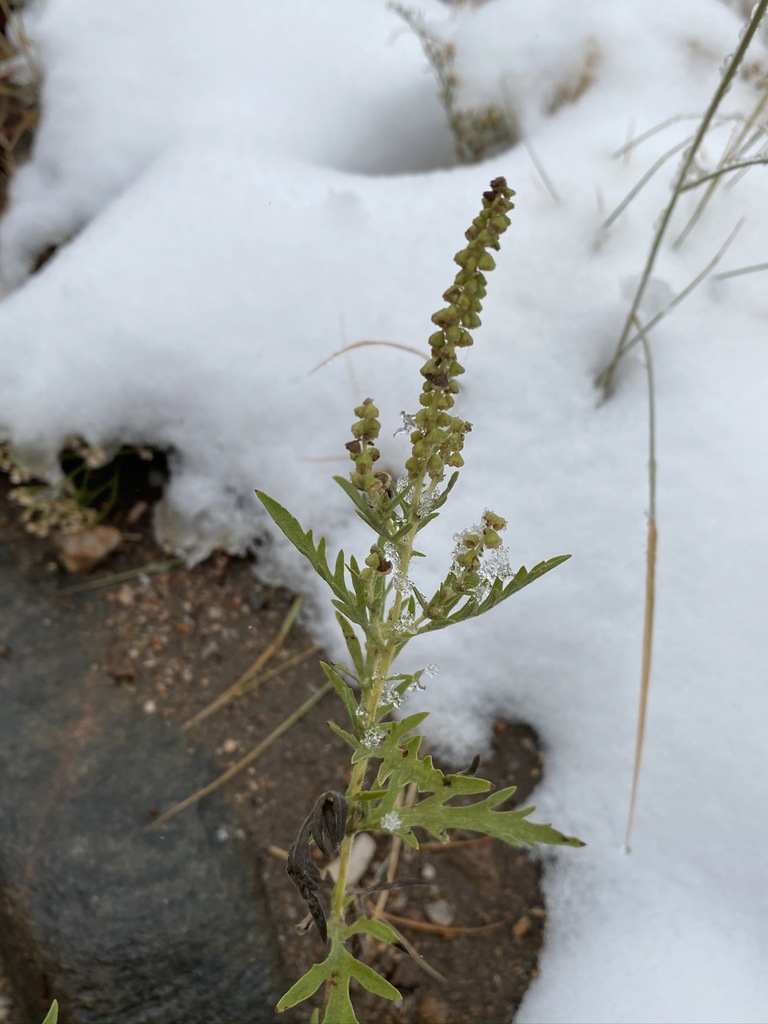
Ambrosia psilostachya
- Origin
- North America
- Part used
- See detailed notebook
- Tradition
- Traditional ethnobotany
A bitter herb of North America's plains and dry lands, western ragweed (Ambrosia psilostachya) was used by several Indigenous peoples as a field remedy, as unassuming in the landscape as it was useful in the traditional healer's plant kit. Its reputation remains modest, that of a common plant rather than a great remedy, but it holds an old place in the folk uses of the great plains.
Traditional uses
Soothing skin irritation
The crushed leaves or a decoction were traditionally applied to insect bites, rashes, and mild skin irritation.
An occasional digestive bitter
In small amounts, a leaf-based preparation was sometimes used for its bitter properties, thought to support digestion after a heavy meal.
Traditional use for fevers
Some Plains tribes reported using the plant as a decoction to help with feverish states and diffuse pain.
Old respiratory fumigations
The dried plant was sometimes burned or used as a fumigation in certain ritual and traditional practices related to the airways.
Before you use it
The pollen of Ambrosia psilostachya is a major, well-documented respiratory allergen; handling the fresh plant is discouraged for people with allergies or asthma. Prolonged or high-dose internal use is not documented as safe: it is essential to consult a health professional before any oral use. Discouraged for pregnant or breastfeeding women as well as young children, for lack of reliable safety data. Avoid prolonged skin contact in sensitive individuals, as contact reactions have been reported within the daisy family.
The detailed notebook
- Prepared as a paste or decoction
- Traditional duration of use
- Known contraindications
- Related species and their uses
Where to find it
Partner herbalists — available with the detailed notebook.
Sources
PFAF