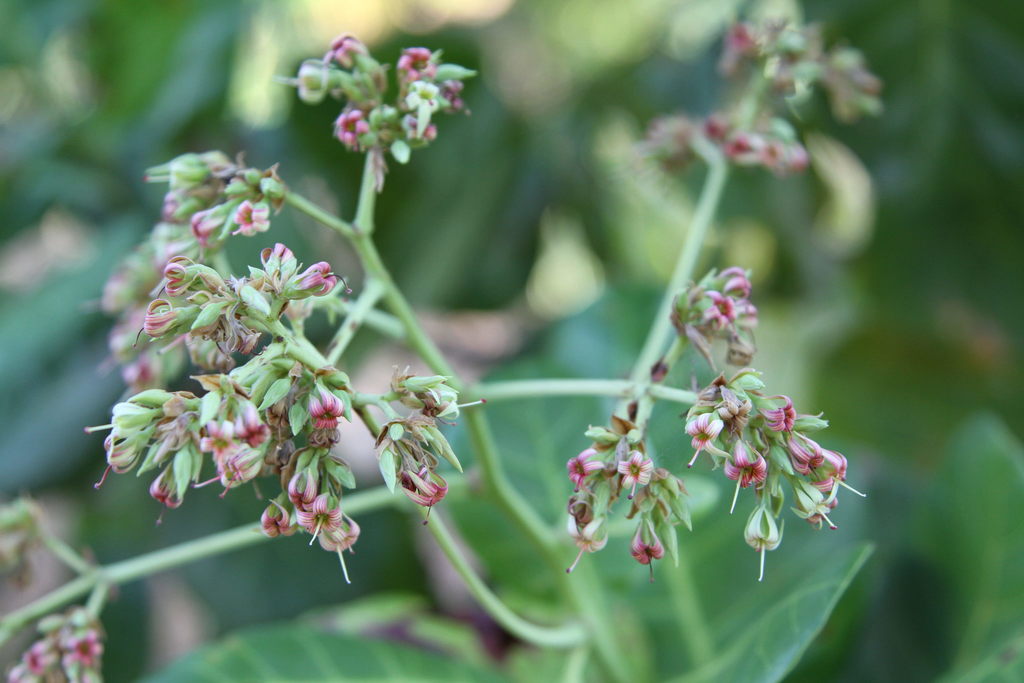
Cashew tree
- Origin
- South America
- Part used
- See detailed notebook
- Tradition
- Traditional ethnobotany
Native to the coasts of Brazil, the cashew tree was carried by Portuguese navigators to Africa and Asia as early as the sixteenth century, becoming both a food-bearing tree and a folk remedy. From its nut protected by a formidable shell to the virtues of its bark and leaves, traditional South American healers found a use for almost every part of it.
Traditional uses
Relief of intestinal troubles
In Brazilian folk medicine, cashew bark decoction was traditionally used to calm diarrhea and digestive discomfort.
Care for wounds and skin conditions
The leaves and bark, reputed to be astringent, were used externally as washes or compresses to help heal small wounds.
Support for colds
A leaf infusion was traditionally drunk to accompany flu-like states and sore throats in some South American communities.
Mouth and gum hygiene
The bark, chewed or used as a decoction gargle, was traditionally used for its tightening effect on the oral mucous membranes.
What to know before use
The cashew nut shell contains a caustic liquid (cardol balm) that is strongly irritating and allergenic; it must never be handled or eaten raw. People allergic to tree nuts should avoid any internal or external use of cashew. Prolonged internal use of the bark or leaves should remain occasional and be discussed with a health professional, particularly if undergoing medication treatment. Not recommended for pregnant or breastfeeding women or young children, for lack of sufficient data on the safety of traditional preparations.
The detailed notebook
- Prepared as a paste or decoction
- Traditional duration of use
- Known contraindications
- Related species and their uses
Where to find it
Partner herbalists — available with the detailed notebook.
Sources
PFAF