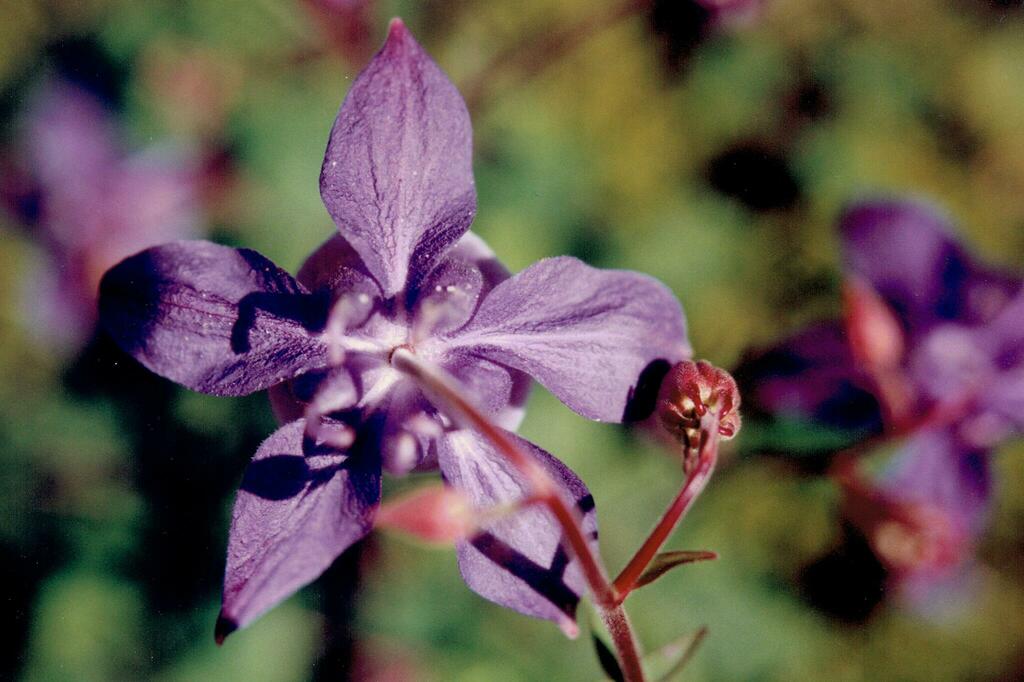
Common Columbine
- Origin
- Europe
- Part used
- See detailed notebook
- Tradition
- Traditional ethnobotany
In monastery gardens and cool hedgerows across Europe, common columbine unfurled its blue-violet bells as early as the Middle Ages, as much to adorn as to heal. Old herbalists mentioned it in their treatises, while handling it with particular caution, since the whole plant is reputed toxic. Today it remains prized chiefly for its ornamental beauty, its traditional internal use having largely fallen out of practice.
Traditional uses
External application for skin conditions
Leaves and flowers were sometimes used as a compress or lotion to soothe certain skin irritations, in European folk tradition.
Traditional use as a mild diuretic
In the past, a highly diluted decoction of root or seeds was sometimes used to promote urinary elimination, a use now abandoned due to the plant's toxicity.
Old-time gargle for the throat
Some herbalist notebooks report a diluted gargle used for sore throats, an old practice not recommended today without professional supervision.
Traditional use linked to menstruation
Columbine was sometimes cited in folk traditions in connection with women's cycles, a use no longer practiced due to the risks associated with the plant.
Before you use it
The whole plant is considered toxic, particularly the seeds and roots: internal use is strongly discouraged without a qualified professional's advice. Contraindicated during pregnancy and breastfeeding due to toxic risks and a traditional use linked to women's cycles. Keep out of reach of children, as the plant and its seeds can cause poisoning. Avoid prolonged or repeated use without supervision, even externally, in cases of damaged or sensitive skin.
The detailed notebook
- Prepared as a paste or decoction
- Traditional duration of use
- Known contraindications
- Related species and their uses
Where to find it
Partner herbalists — available with the detailed notebook.
Sources
PFAF