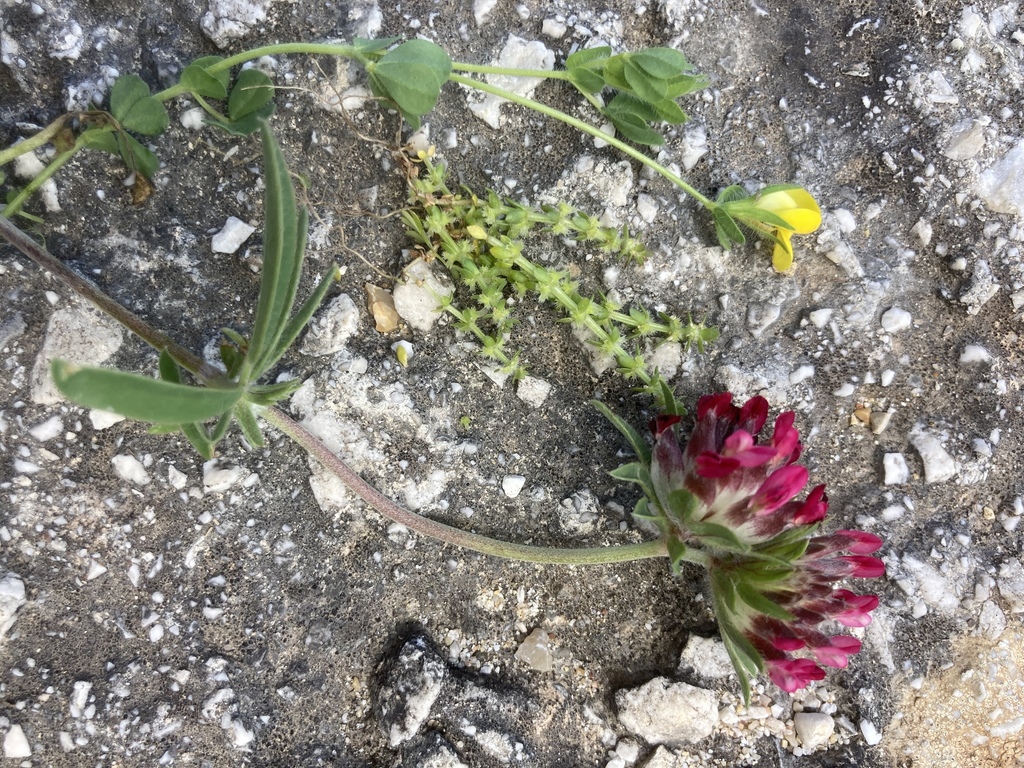
Kidney Vetch
- Origin
- Europe
- Part used
- See detailed notebook
- Tradition
- Traditional ethnobotany
Kidney vetch, a modest legume of dry meadows and rocky ground, carries its calling in its very name: ‘vulneraria,’ the one that heals wounds. As early as the Middle Ages, herbalists in the European countryside gathered it to dress the wounds of farmers and shepherds, earning it the folk nickname ‘wall clover.’ Its pale yellow flowers, gathered into small woolly heads, remain today a living memory of this field pharmacopoeia.
Traditional uses
Traditional care for minor wounds
The flower and flowering top were applied as a poultice or compress to cuts, scrapes, and bruises, in the folk tradition of Europe's mountainous and rural regions.
Soothing irritated skin
As a lotion or compress, the flower infusion was traditionally used to clean and soothe mildly damaged or irritated skin.
Occasional internal use
Drunk as a tea, the plant was sometimes used in country traditions as a mildly soothing beverage, alongside external care.
Mild traditional support
Some old herbalist notebooks mention a kidney vetch tea for an irritated throat, a use that remained marginal and less documented than its skin application.
Before you use it
This entry is for historical and informational purposes; it does not replace medical advice. Reserved for external use on minor superficial wounds; never apply to a deep, infected wound or one that is not healing normally. As a precaution, avoid prolonged use or ingestion during pregnancy or breastfeeding, due to insufficient data. Test on a small area of skin before wider application, in case of an allergic predisposition.
The detailed notebook
- Prepared as a paste or decoction
- Traditional duration of use
- Known contraindications
- Related species and their uses
Where to find it
Partner herbalists — available with the detailed notebook.
Sources
PFAF, PubMed