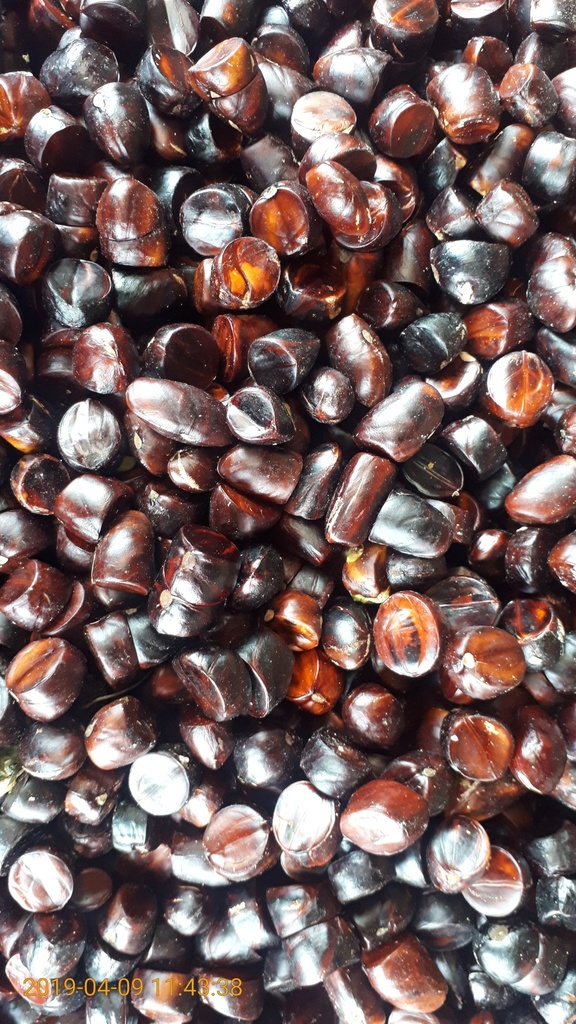
Archidendron bubalinum
- Origin
- Asia
- Part used
- See detailed notebook
- Tradition
- Traditional ethnobotany
Known in the Indonesian archipelago as "jengkol," Archidendron bubalinum is a tree of the legume family whose fleshy seeds have long featured both on the table and in traditional herbalists' notebooks. Eaten cooked, these seeds with their distinctive odor hold a special place in the folk pharmacopoeia of Southeast Asia, particularly to support elimination functions.
Traditional uses
Traditional liver support
The cooked seeds were traditionally eaten in Indonesia and Malaysia to support elimination functions and assist the liver's work.
Folk digestive use
In certain regions, prepared seeds were part of everyday eating, with a reputation for promoting good digestion.
Urinary tract support
Javanese folk tradition associates moderate consumption of these seeds with a favorable effect on kidney and urinary tract function.
Traditional food-remedy
Included as a traditional vegetable in several regional cuisines, jengkol seeds were seen as a fortifying food to be eaten in moderation.
Before you use it
Excessive consumption, or consumption of insufficiently cooked seeds, is associated with documented kidney and urinary disorders (djenkolic acid deposits): caution and moderation are essential. Use is not recommended for those with a history of kidney problems, pregnancy, or breastfeeding, without prior medical advice. The seeds must always be thoroughly cooked before eating; raw use should be avoided. Do not exceed the quantities traditionally eaten as an occasional food; when in doubt, consult a healthcare professional.
The detailed notebook
- Prepared as a paste or decoction
- Traditional duration of use
- Known contraindications
- Related species and their uses
Where to find it
Partner herbalists — available with the detailed notebook.
Sources
PFAF, Wikipedia