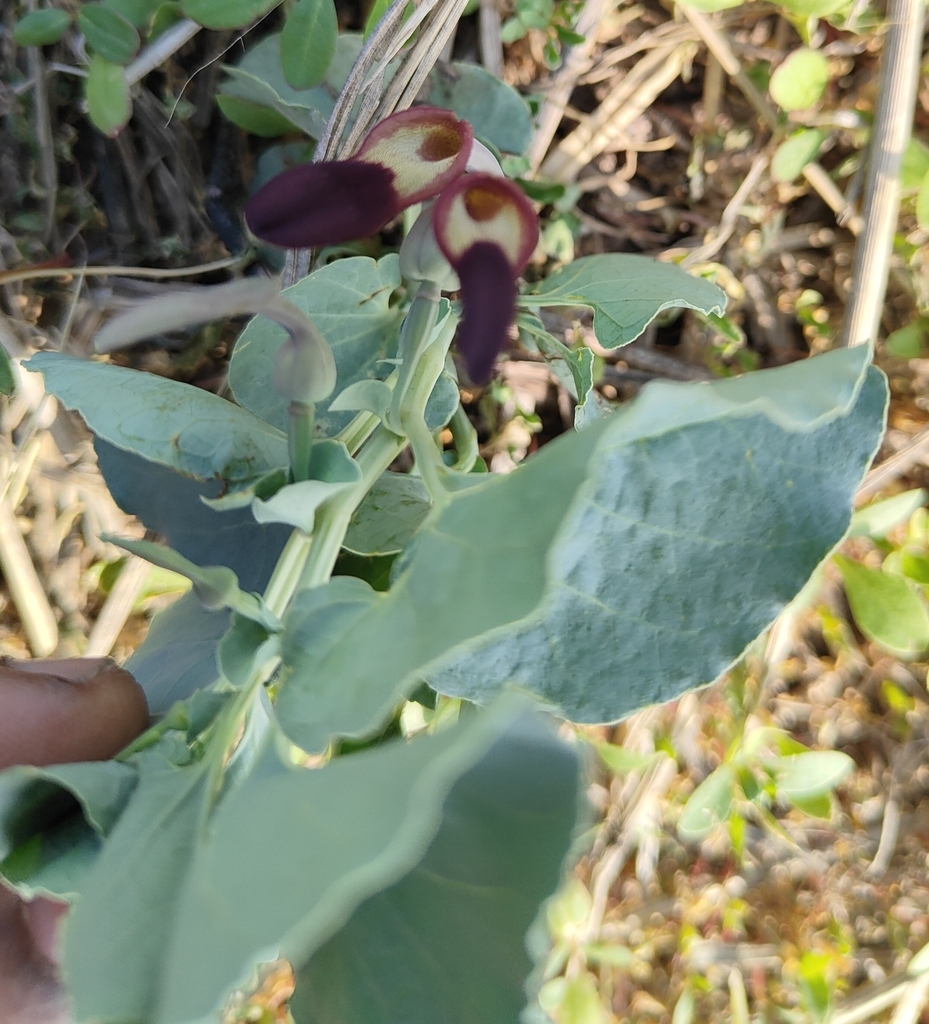
Aristolochia bracteolata
- Origin
- Africa
- Part used
- Leaves, Root
- Tradition
- Traditional ethnobotany
In the arid regions of Africa and as far as India, bracted birthwort was known to traditional healers as a plant to be handled with extreme restraint, reserved for external uses and highly diluted preparations. Its pronounced bitterness and characteristic odor long marked it as a "strong" plant, not to be confused with everyday simples. It now holds a place that is mainly historical and documentary, its internal use having been largely abandoned.
Traditional uses
Bitterness and old digestive troubles
The leaves were traditionally used in very small amounts as a digestive bitter and for what ancient practitioners called a "vermifuge" action, during intestinal troubles.
Skin applications and bites
Crushed leaves as a poultice were applied locally to the skin, particularly for stings, snake bites, or skin conditions, according to practices reported in Africa and South Asia.
A traditional use against fevers
The root and leaves featured in traditional preparations intended to reduce fever, particularly in contexts of malaria, according to old folk medicine.
An old traditional gynecological use
This plant was sometimes cited in traditional uses related to the female cycle, a use now strongly discouraged due to the risks associated with aristolochic acids.
What to know before use
A plant containing aristolochic acids, recognized as nephrotoxic and carcinogenic: internal use is now formally not recommended and the species is regulated or banned in several countries. Strictly contraindicated during pregnancy and breastfeeding due to its traditional abortive use and its toxicity. Never use in children or as self-medication; any use, even external, must be supervised by a knowledgeable health professional. This entry is presented for historical and documentary purposes only; it in no way constitutes a recommendation for current use.
The detailed notebook
- Prepared as a paste or decoction
- Traditional duration of use
- Known contraindications
- Related species and their uses
Where to find it
Partner herbalists — available with the detailed notebook.
Sources
PFAF, Wikipedia