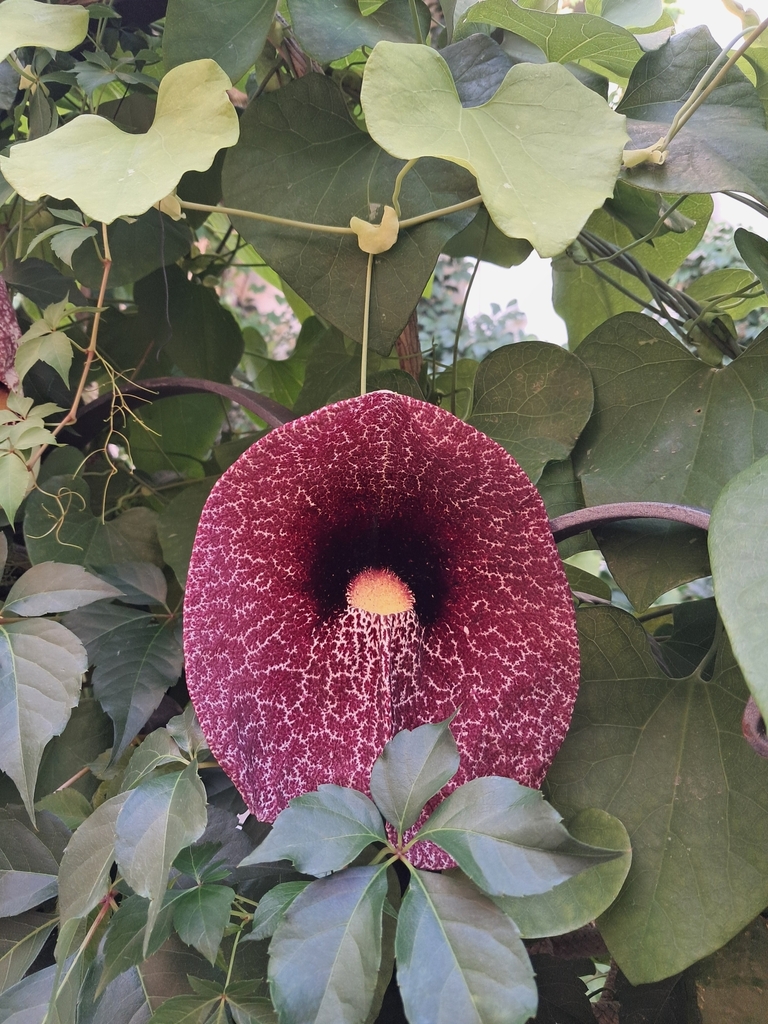
Aristolochia grandiflora
- Origin
- North America
- Part used
- Leaves
- Tradition
- Traditional ethnobotany
Aristolochia grandiflora, also known as "pelican flower" for the strange shape of its corolla, grows in the warm regions of Central America and southern Mexico. Traditional healers of these lands once credited it with purifying properties, particularly against snakebite and various ailments, uses now abandoned because of identified risks. This entry recounts these old practices for purely historical and documentary purposes.
Traditional uses
Reputed for snakebite
In certain Central American folk traditions, the leaves were applied or consumed in cases of snakebite, a belief widespread among several Aristolochia species.
Used as a bitter tonic
The leaves were sometimes used as a bitter decoction, for a traditional purpose of digestive stimulation, in the manner of other bitter plants of folk pharmacopoeia.
External use on wounds
A traditional external use of the leaves as a poultice on wounds or skin inflammation is reported, according to local folk herbalist practices.
A folk remedy for fevers
The plant was among the traditional remedies invoked against feverish states in certain regions of tropical America.
Before you use it
The genus Aristolochia contains aristolochic acid, a substance recognized as nephrotoxic and carcinogenic: its internal use is now discouraged and regulated in many countries. Never use during pregnancy, breastfeeding, or in children. Prolonged or repeated use, even at a low dose, can be associated with serious, irreversible kidney damage. Any use, even external, should be discussed with a qualified health professional.
The detailed notebook
- Prepared as a paste or decoction
- Traditional duration of use
- Known contraindications
- Related species and their uses
Where to find it
Partner herbalists — available with the detailed notebook.
Sources
PFAF, Wikipedia