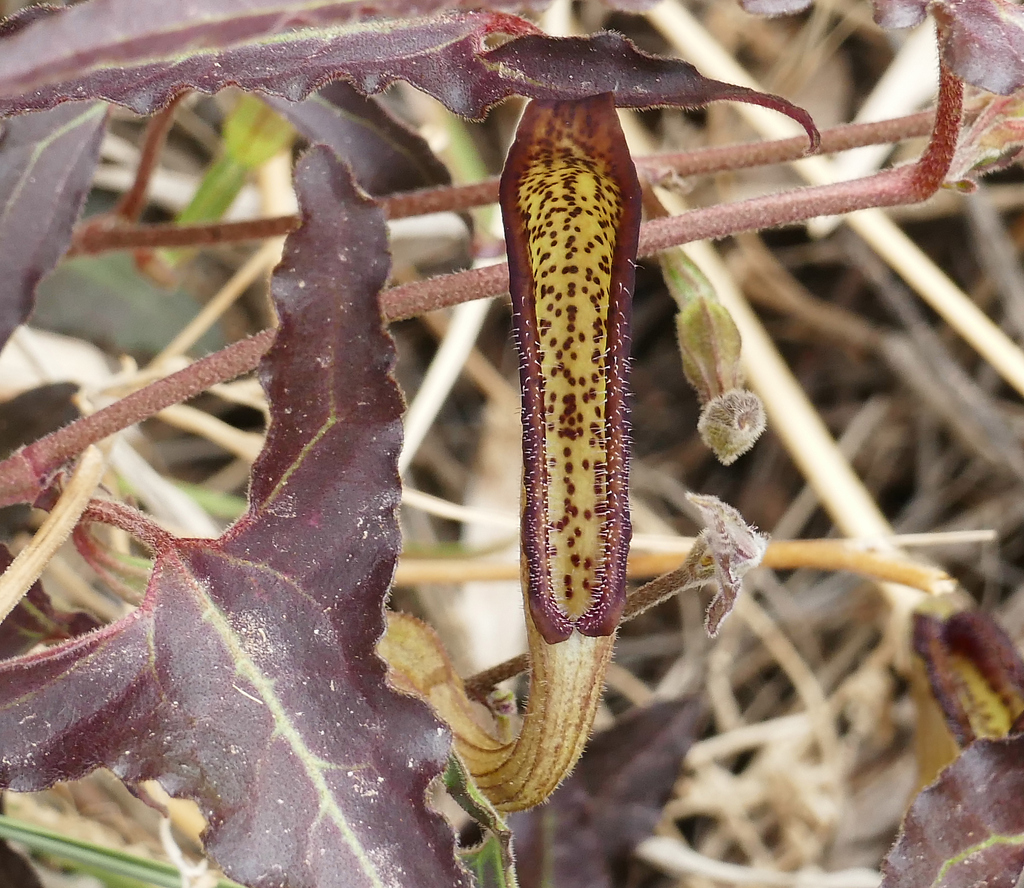
Aristolochia watsonii
- Origin
- North America
- Part used
- Stem
- Tradition
- Traditional ethnobotany
Among the plants of the Sonoran Desert, Aristolochia watsonii, sometimes called "hierba del indio" by the peoples of the American Southwest, held a particular place in traditional Native American and Mexican pharmacopoeias. Its twisted stem and acrid smell made it a plant as feared as it was sought, reserved for precise, limited uses.
Traditional uses
A traditional remedy for bites
The tribes of the Sonoran Desert traditionally used the chewed stem or a poultice on snakebites, while awaiting more effective help. This use, widely documented in regional ethnobotany, has never been scientifically validated as an antidote.
Occasional use for stomachaches
A mild stem decoction was sometimes used in very small amounts to relieve occasional digestive trouble, according to practices reported among certain Native American communities.
External application on wounds
The crushed stem or a poultice was traditionally applied to wounds or skin inflammation, as a local external treatment.
A traditional fever remedy
Some ethnobotanical sources mention an occasional use of the plant to try to bring down a fever, always in a very diluted preparation.
Before you use it
All Aristolochia species contain aristolochic acid, a substance recognized as nephrotoxic and carcinogenic; their internal use is strongly discouraged and regulated, even banned in several countries. Never use this plant internally without medical advice or that of a practitioner qualified in plant toxicology. Contraindicated during pregnancy and breastfeeding because of proven risks to the kidneys and fetal development. Prolonged or repeated use, even at a low dose, can cause serious, irreversible kidney damage; do not repeat doses without strict supervision.
The detailed notebook
- Prepared as a paste or decoction
- Traditional duration of use
- Known contraindications
- Related species and their uses
Where to find it
Partner herbalists — available with the detailed notebook.
Sources
PFAF, Wikipedia