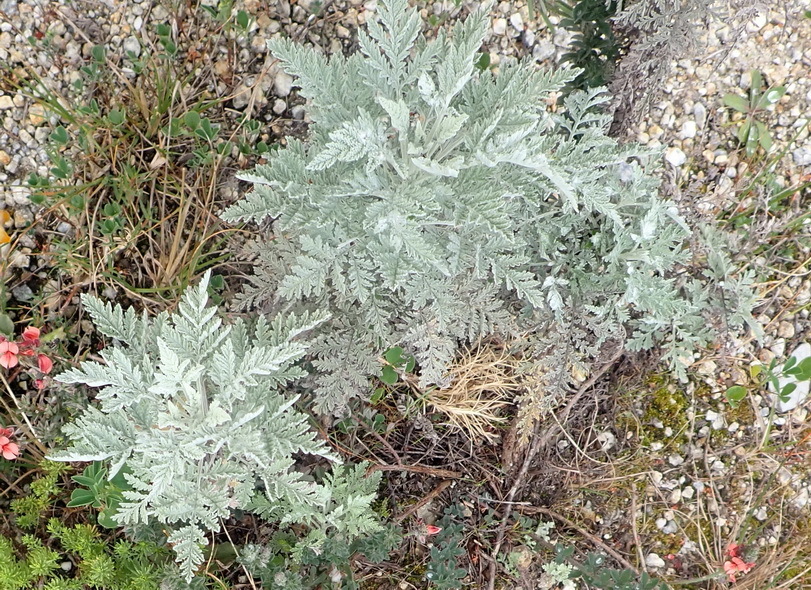
Artemisia afra
- Origin
- Africa
- Part used
- Leaves, Flowers
- Tradition
- Traditional ethnobotany
African wormwood, long known as umhlonyane in Zulu or wilde als in Afrikaans, this camphor-scented wormwood has accompanied the healing traditions of southern and eastern Africa for generations. Its silvery leaves and penetrating scent have made it one of the most widely used and respected medicinal plants of Southern Africa. It is found as readily in family gardens as hung in dried bunches inside homes.
Traditional uses
Respiratory ailments
Traditionally used as an inhalation or infusion to clear the respiratory tract during colds, coughing, and bronchial ailments. The plant's warm vapors were reputed to relieve congestion.
Digestive support
Used as a bitter herbal tea to stimulate the appetite and relieve minor digestive troubles, in keeping with traditional uses of wormwoods as bitter tonic plants.
Fevers and bodily pain
Used as a decoction or compress to help with feverish states and relieve headaches, muscle pain, and joint pain, according to South African traditional pharmacopeia.
Purifying fumigation
The dried leaves were burned as a fumigation in certain traditions, both for their perceived virtues on the respiratory tract and for a ritual use of purifying a space.
What to know before use
A plant of the Asteraceae family containing powerful aromatic compounds (thujone and related compounds); prolonged or high-dose use is not recommended without professional advice. Not recommended during pregnancy and breastfeeding due to properties traditionally considered emmenagogue. To be avoided in people allergic to plants of the Asteraceae family (daisies, chamomile, ragweed). Do not use in young children, and seek the advice of a health professional if undergoing medication treatment.
The detailed notebook
- Prepared as a paste or decoction
- Traditional duration of use
- Known contraindications
- Related species and their uses
Where to find it
Partner herbalists — available with the detailed notebook.
Sources
Wikipedia