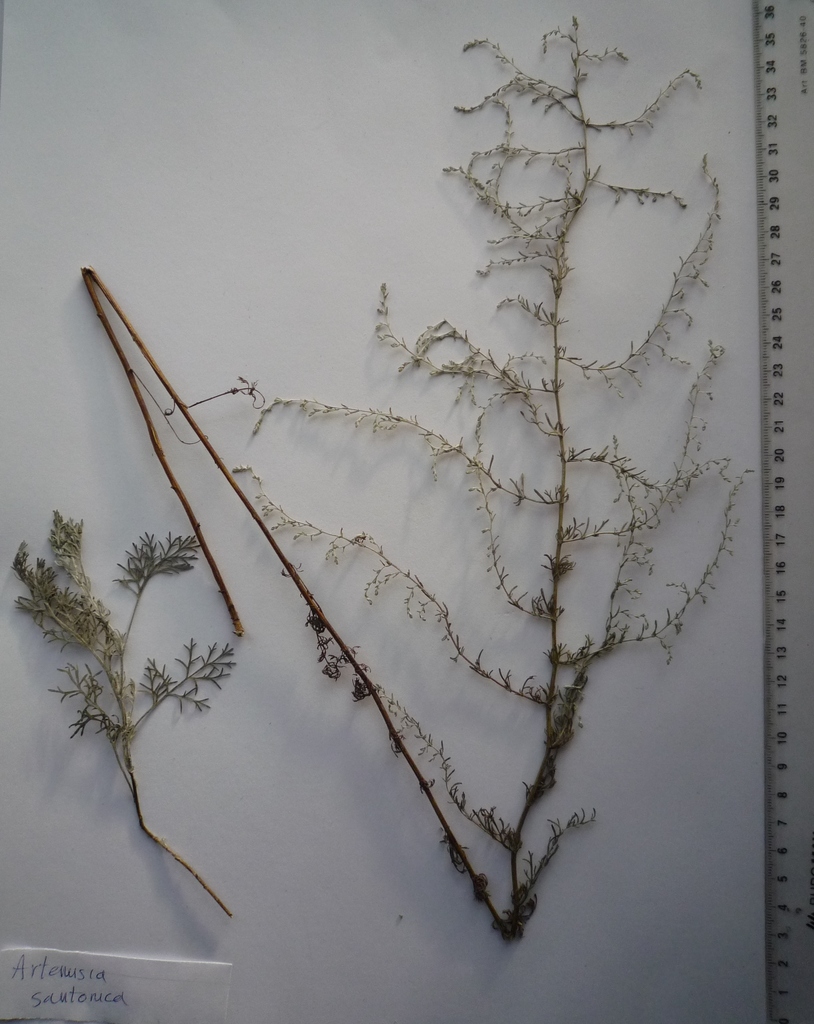
Artemisia santonicum
- Origin
- Europe
- Part used
- See detailed notebook
- Tradition
- Traditional ethnobotany
Santonica wormwood, a plant of the steppes and salt shores of Eastern Europe, was long cultivated for its flowering tops, rich in deworming substances, notably the santonin that gave it its name. Old herbalists reserved it for a precise, carefully supervised use, far removed from everyday teas. Its reputation endured for centuries as a country remedy against intestinal parasites, before modern medicine isolated its active compounds.
Traditional uses
Traditional deworming use
The flowering tops of Artemisia santonicum were traditionally used as a dewormer, particularly against roundworms and pinworms, according to Eastern European folk uses.
Bitter digestive stimulant
Like other wormwoods, it was sometimes used in very small doses to stimulate a flagging appetite, due to its characteristic bitterness.
Old-time rubs and poultices
In certain rural traditions, the dried, ground plant went into external preparations meant to keep parasites away from linen or bedding.
Deworming livestock
Its most widespread historical use concerned deworming livestock in steppe regions, before the advent of modern veterinary treatments.
Before you use it
A toxic plant at excessive doses: it contains santonin, whose margin between an active dose and a toxic one is narrow; internal use must never be improvised. Contraindicated during pregnancy and breastfeeding, as well as in young children, due to neurotoxic risks and possible effects on the uterus. To be avoided in cases of epilepsy or a history of seizures, as santonin is reputed to lower the seizure threshold. Do not use without the advice of a healthcare professional trained in herbal medicine, particularly during ongoing medication.
The detailed notebook
- Prepared as a paste or decoction
- Traditional duration of use
- Known contraindications
- Related species and their uses
Where to find it
Partner herbalists — available with the detailed notebook.
Sources
PFAF