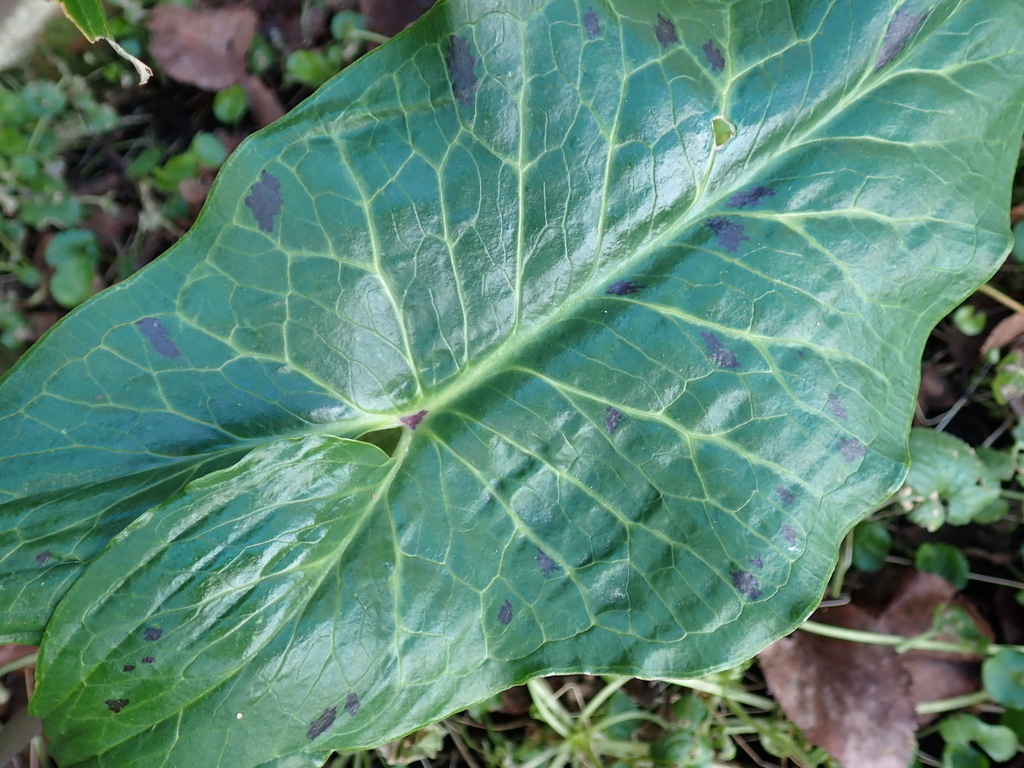
Arum maculatum
- Origin
- Europe
- Part used
- Leaves, Root
- Tradition
- Traditional ethnobotany
Beneath the damp canopy of Europe's woodlands, the spotted arum unfurls its broad heart-shaped leaves, often speckled with purple, before revealing its curious spring spathe. Old herbalists knew it well, but handled it with particular caution, since this plant belongs to the arum family, known for its acridity and toxicity when fresh.
Traditional uses
Traditional use for respiratory ailments
The dried, carefully prepared root was once used in certain European folk traditions to soothe catarrh and hoarseness, in very small amounts.
External application on irritated skin
The fresh leaf sap, extremely irritating, was used only in minute amounts as a traditional external counter-irritant, notably for rheumatism, but this practice is now largely abandoned due to the risk of chemical burns.
Old use as a strong purgative
The root, after lengthy preparation and thorough drying meant to reduce its acridity, was historically cited as a purgative in certain herbalist notebooks, a use now considered dangerous and abandoned.
A plant of old gardens and hedgerows
The spotted arum appears in European botanical folklore as an indicator plant of rich, shaded soils, more observed and respected than actually used by cautious practitioners.
Before you use it
The whole plant is toxic when fresh: it contains calcium oxalate crystals and irritating compounds that can cause severe burns to the mouth, throat, and digestive tract. Never ingest the red berries, which are especially attractive and dangerous to children, even in very small amounts. No preparation based on Arum maculatum should be made without the supervision of a healthcare professional or qualified herbalist, due to the known toxicity of the fresh plant. Formally not recommended for pregnant or breastfeeding women, children, or in cases of uncertain botanical identification, as this plant can be confused with other species.
The detailed notebook
- Prepared as a paste or decoction
- Traditional duration of use
- Known contraindications
- Related species and their uses
Where to find it
Partner herbalists — available with the detailed notebook.
Sources
PFAF, Wikipedia