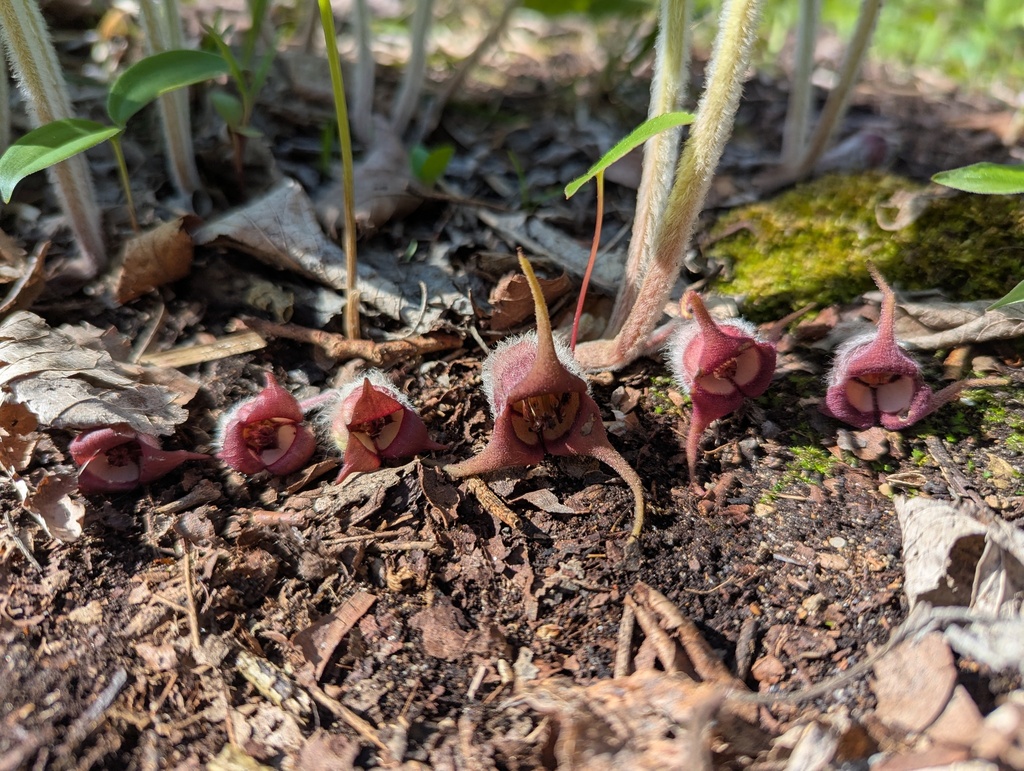
Canadian wild ginger
- Origin
- North America
- Part used
- Root
- Tradition
- Traditional ethnobotany
Beneath the damp canopy of eastern North American forests, Canadian wild ginger carpeted the ground with its heart-shaped leaves, quiet guardians of a fragrant root. Indigenous nations — the Iroquois, Cherokee, and Ojibwe among others — had long known its uses, passed down orally from generation to generation. European settlers long nicknamed it "wild ginger" because of its pungent aroma, though it is not botanically related to true ginger.
Traditional uses
Traditional digestive support
The root was chewed or infused to ease stomachaches, bloating, and difficult digestion, in the manner of a fortifying aromatic.
A traditional use for colds
Indigenous tribes used a root decoction to help with feverish states, colds, and coughs, often alongside other plants.
A poultice for pain and wounds
Used externally, the crushed root or a poultice traditionally served to relieve joint pain and help heal superficial wounds.
A traditional use related to women's cycles
Some traditions report a use of the root to bring on menstruation, a historical use that today calls for extreme caution and medical advice.
Before you use it
Contains aristolochic acid, a substance recognized as nephrotoxic and potentially carcinogenic: internal use is now strongly discouraged without the advice of a qualified health professional. Strictly forbidden during pregnancy and breastfeeding because of its traditional emmenagogue use and its toxic risks. Never use in children or in cases of pre-existing kidney failure. Do not confuse it with true ginger (Zingiber officinale): despite the nickname, it is neither the same plant nor does it have the same properties.
The detailed notebook
- Prepared as a paste or decoction
- Traditional duration of use
- Known contraindications
- Related species and their uses
Where to find it
Partner herbalists — available with the detailed notebook.
Sources
PubMed, Wikipedia