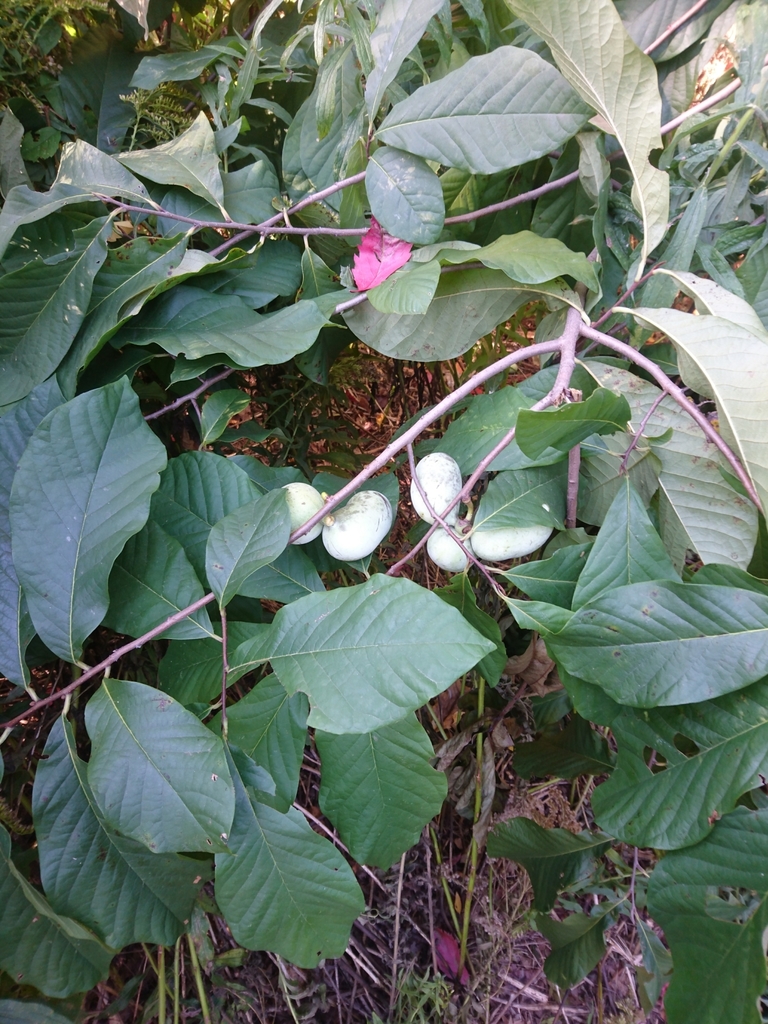
pawpaw
- Origin
- North America
- Part used
- Leaves, Seeds/fruits, Root
- Tradition
- Traditional ethnobotany
The pawpaw, an unassuming shrub of the riverside forests of North America, produced the continent's largest native fleshy fruit, prized by Indigenous peoples long before the arrival of European settlers. The settlers in turn learned the use of its leaves and bark, notably as a folk remedy against skin parasites and as a natural insecticide. Even today, the pawpaw keeps a place apart in the notebooks of herbalists attentive to the traditions of the New World.
Traditional uses
Traditional treatment for skin parasites
The crushed leaves and bark were used externally against lice and certain skin parasites, according to uses reported by Native American tribes and later adopted by settlers.
A household repellent and insecticide
The dried, powdered leaves traditionally served to repel or eliminate certain insects, particularly in the storage of seeds and fabrics.
Fruit eaten as a tonic food
The ripe, rich, sweet fruit was eaten fresh by Indigenous peoples as a late-summer food, valued for its nutritional worth rather than for any specific medicinal property.
A traditional vermifuge for livestock
The crushed seeds were sometimes used empirically as a vermifuge in North American rural uses, a use to be considered with the greatest caution.
Before you use it
The seeds and bark contain acetogenins, compounds whose neurological toxicity has been documented with prolonged or high-dose use: their internal use is discouraged without professional supervision. The fruit pulp can cause skin or digestive reactions (nausea, rashes) in certain sensitive people; it is wise to test a small amount. Internal use of the leaves, seeds, and root is discouraged for pregnant or breastfeeding women, as well as children, in the absence of sufficient safety data. Do not use for prolonged periods or as self-medication: consult a health professional or an experienced herbalist before any use of the ripe fruit other than as food.
The detailed notebook
- Prepared as a paste or decoction
- Traditional duration of use
- Known contraindications
- Related species and their uses
Where to find it
Partner herbalists — available with the detailed notebook.
Sources
Wikipedia