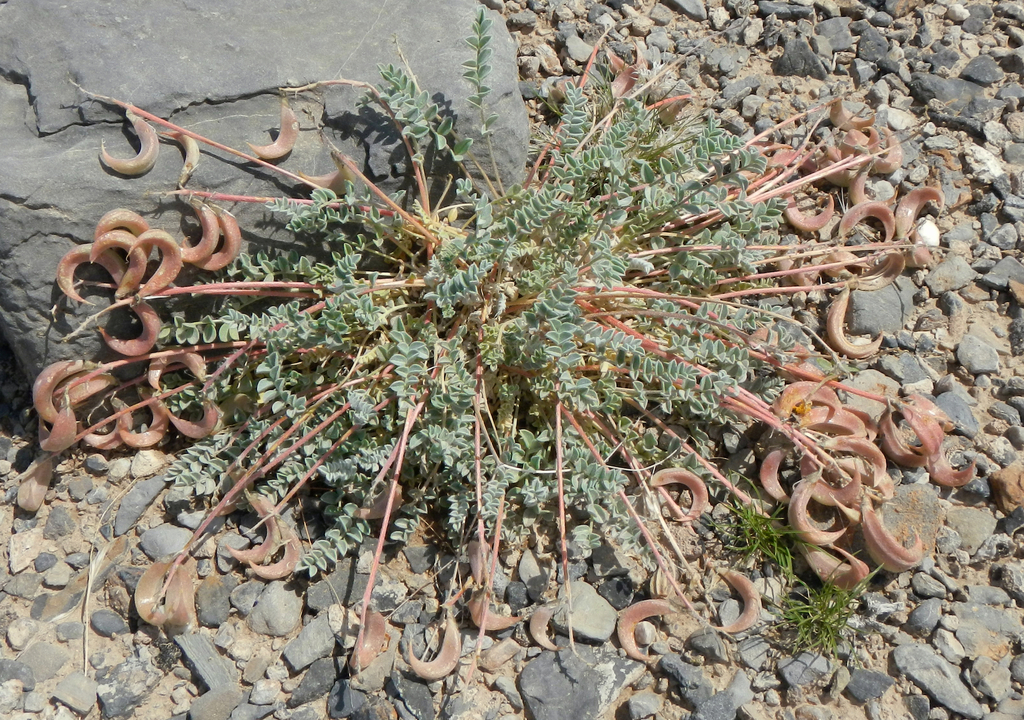
Astragalus amphioxys
- Origin
- North America
- Part used
- Root
- Tradition
- Traditional ethnobotany
Among the milkvetches of the American desert, Astragalus amphioxys holds a quiet place in the knowledge of the peoples of the arid plateaus and basins of the West. Its root, drawn from dry, stony soils, was known to certain Native American nations, who credited it with fortifying properties, in the manner of other milkvetches long used in Asia. This text gathers these scraps of oral and botanical tradition, for purely historical purposes.
Traditional uses
A traditional fortifying root
The dried root was sometimes used as a mild decoction, for a general support of vitality, in the manner of other milkvetches traditionally used around the world.
A plant of ceremonial uses
Some tribes of the American Southwest reportedly gave this plant a place in ritual or protective practices, more symbolic than therapeutic.
Local application on the skin
The crushed root or a poultice was reportedly occasionally used externally, to soothe minor skin irritation, according to poorly documented local uses.
Mild digestive support
A diluted root decoction was sometimes drunk occasionally to help with difficult digestion, in certain local traditions.
Before you use it
The genus Astragalus includes many toxic wild North American species (selenium accumulators or containing neurotoxic compounds such as swainsonine); species confusion is a real and serious risk. Astragalus amphioxys is not the astragalus commonly cultivated and documented in pharmacopoeia (Astragalus membranaceus): its traditional use remains poorly documented and should not be equated with that of the latter. Discouraged for pregnant or breastfeeding women, in children, and if undergoing medical treatment, for lack of sufficient safety data. Any internal use should be preceded by the advice of a health professional or a qualified herbalist who precisely knows the harvested species.
The detailed notebook
- Prepared as a paste or decoction
- Traditional duration of use
- Known contraindications
- Related species and their uses
Where to find it
Partner herbalists — available with the detailed notebook.
Sources
PFAF, Wikipedia