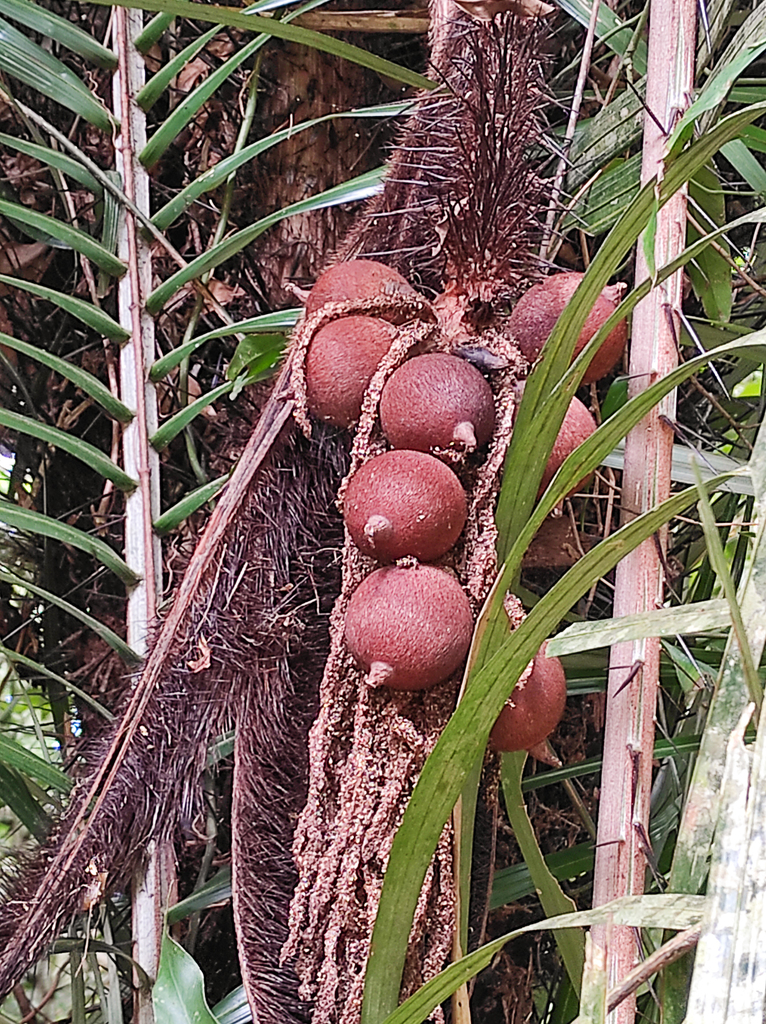
Astrocaryum aculeatissimum
- Origin
- South America
- Part used
- See detailed notebook
- Tradition
- Traditional ethnobotany
Beneath the canopy of Brazil's Atlantic Forest grows the Tucum, a palm bristling with black spines that the peoples of the coastal forest long ago learned to respect and to use. From its sturdy fibers to its oily fruit, every part found its place in daily life, long before botany drew up its inventory.
Traditional uses
Nourishing pulp and kernel
The pulp and kernel of the fruit, rich in oil, were traditionally consumed by local communities as an energizing food supplement.
Fibers for cordage and weaving
Fibers extracted from young leaves were used to make cordage, fishing nets, hammocks, and woven jewelry, a craft still alive among certain traditional artisans.
Fruit oil for the skin
The oil extracted from the fruit was used empirically to soften and protect the skin, in the manner of other plant oils from Amazonian palms.
Ornaments and ceremonial use
The hard seeds, once polished, were used to make adornments and ornamental objects worn on certain community occasions.
What to know before use
The spines of the trunk and leaves are long and sharp: handling them requires gloves and great care when harvesting. Internal use of the oil or of preparations made from this plant is poorly documented scientifically; it is recommended to seek a healthcare professional's advice before any consumption. Avoid any use in pregnant or breastfeeding women as well as in young children, due to insufficient safety data. Do not use on open wounds or skin irritation without prior medical advice.
The detailed notebook
- Prepared as a paste or decoction
- Traditional duration of use
- Known contraindications
- Related species and their uses
Where to find it
Partner herbalists — available with the detailed notebook.
Sources
Wikipedia