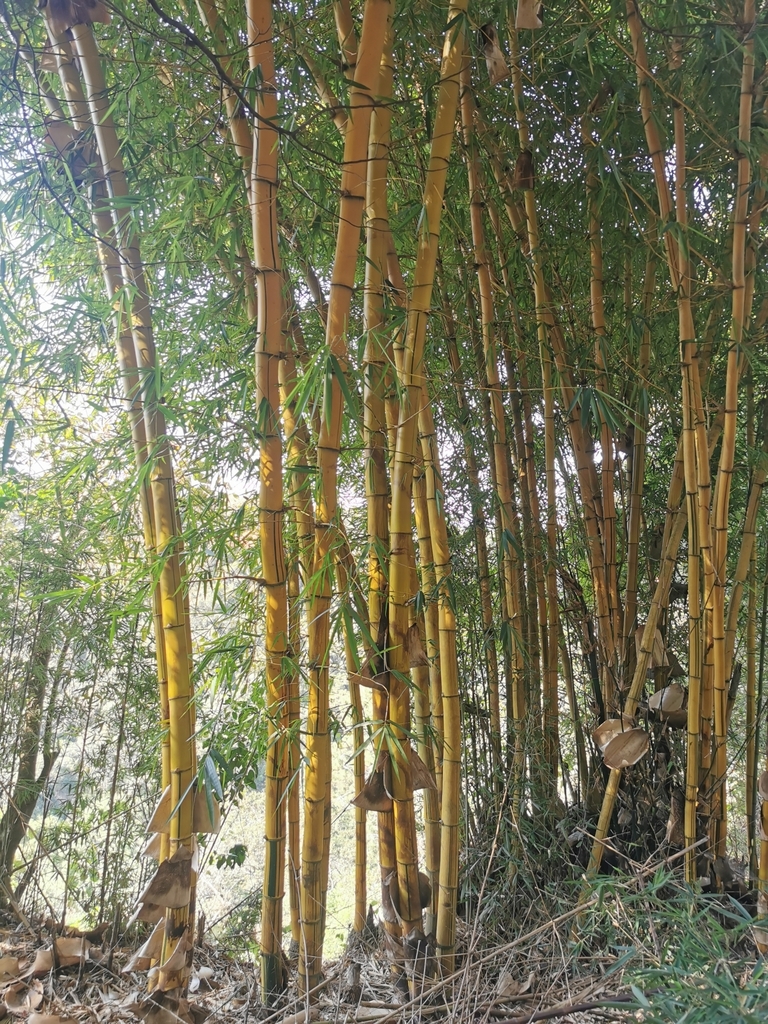
Bambusa vulgaris
- Origin
- Asia
- Part used
- Leaves, Stem
- Tradition
- Traditional ethnobotany
Common bamboo, Bambusa vulgaris, has accompanied the peoples of Asia for millennia, both in construction and in family remedies. Its slender stems and evergreen leaves have fed a rich folk pharmacopeia, passed down from generation to generation through the villages of Southeast Asia. Traditional herbalists saw in it a cooling plant, soothing excess heat in the body.
Traditional uses
Soothing the respiratory tract
Bamboo leaves were traditionally infused to help with episodes of coughing and calm irritated throats, particularly in Vietnamese and Chinese folk medicine.
Traditional digestive support
A light decoction of leaves or young stems was used to help with difficult digestion and as a refreshing drink during periods of intense heat.
Cooling the body
In several Asian traditions, bamboo is considered a cooling plant by nature, used as an herbal tea to help with mild feverish states and heat-related discomfort.
Traditional skin care
Sap or a stem decoction was sometimes applied externally to soothe certain superficial skin irritations.
What to know before use
Avoid prolonged self-medication; consult a health professional in case of persistent symptoms. Fresh, unprepared young shoots may contain cyanogenic compounds and must be properly cooked before any consumption. Use not recommended for pregnant or breastfeeding women without medical advice, for lack of sufficient data. Prefer sources cultivated or harvested away from polluted areas, as the plant can absorb soil contaminants.
The detailed notebook
- Prepared as a paste or decoction
- Traditional duration of use
- Known contraindications
- Related species and their uses
Where to find it
Partner herbalists — available with the detailed notebook.
Sources
Wikipedia