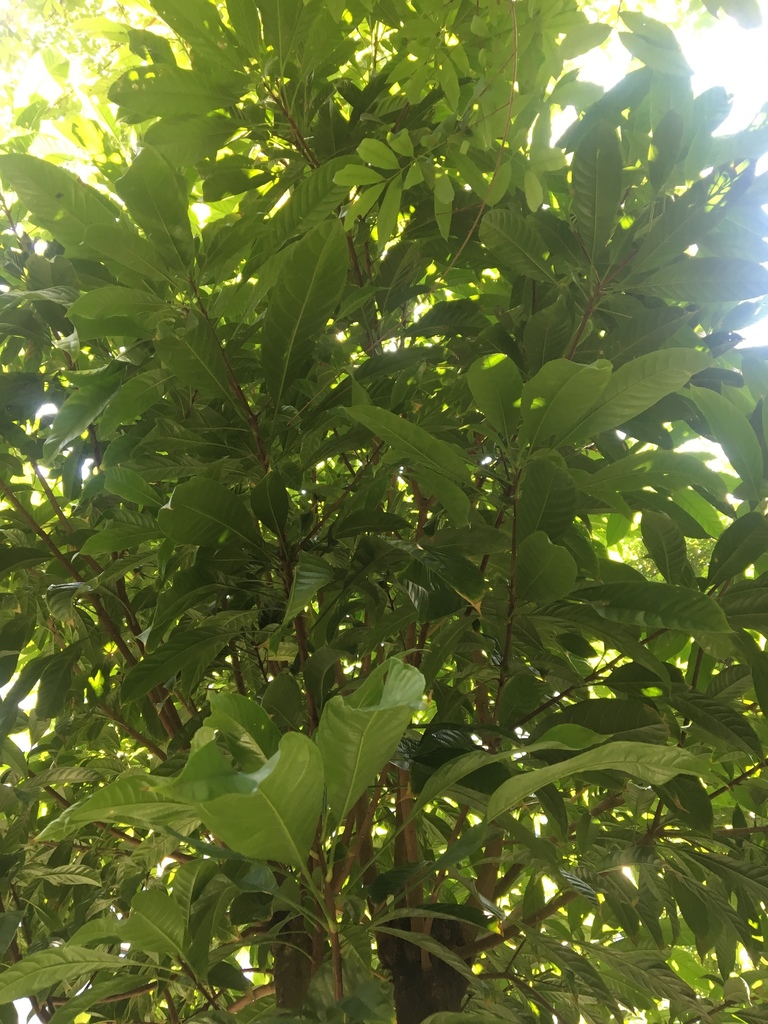
Barringtonia macrostachya
- Origin
- Asia
- Part used
- See detailed notebook
- Tradition
- Traditional ethnobotany
A tree of the shores and damp forests of Southeast Asia, Barringtonia macrostachya belongs to a family whose several members, notably Barringtonia asiatica, have long been known for their bitter seeds and bark, traditionally used by certain riverside communities. Its hanging clusters of flowers and fibrous fruits have fed a discreet use, passed down mostly orally, tied more to fishing and shoreline knowledge than to everyday domestic pharmacopeia.
Traditional uses
Seeds used as a fish stupefacient
In certain regions of Southeast Asia, the crushed seeds of several Barringtonia species, including B. macrostachya, were thrown into calm waters to temporarily stun fish and make them easier to catch, a practice reported by local ethnobotanical observers.
Bark for traditional external use
The bark, made into a paste or decoction, is said to have been applied locally to certain skin irritations in a few village traditions, though this use remains poorly documented compared to other Barringtonia species.
Bitterness used in small quantities
Like other bitter barks of the region, that of B. macrostachya is said to have been used occasionally and in very small quantities for its bitter properties, following a traditional logic of digestive stimulation.
Reported use against intestinal parasites
Certain ethnobotanical sources mention a traditional use of the highly diluted seeds as a vermifuge in a few rural communities, a use to be regarded with great caution due to the known toxicity of the genus.
What to know before use
Barringtonia seeds are known for their toxicity, particularly related to saponins; they must never be consumed without thorough preparation and traditional knowledge. No internal use of this plant should be undertaken without the advice of a health professional or a qualified herbalist with precise knowledge of this species. Formally not recommended for pregnant or breastfeeding women, or children, in the absence of reliable safety data. Do not confuse with other Barringtonia species with different uses and toxicities; precise botanical identification is essential before any handling.
The detailed notebook
- Prepared as a paste or decoction
- Traditional duration of use
- Known contraindications
- Related species and their uses
Where to find it
Partner herbalists — available with the detailed notebook.
Sources
PFAF