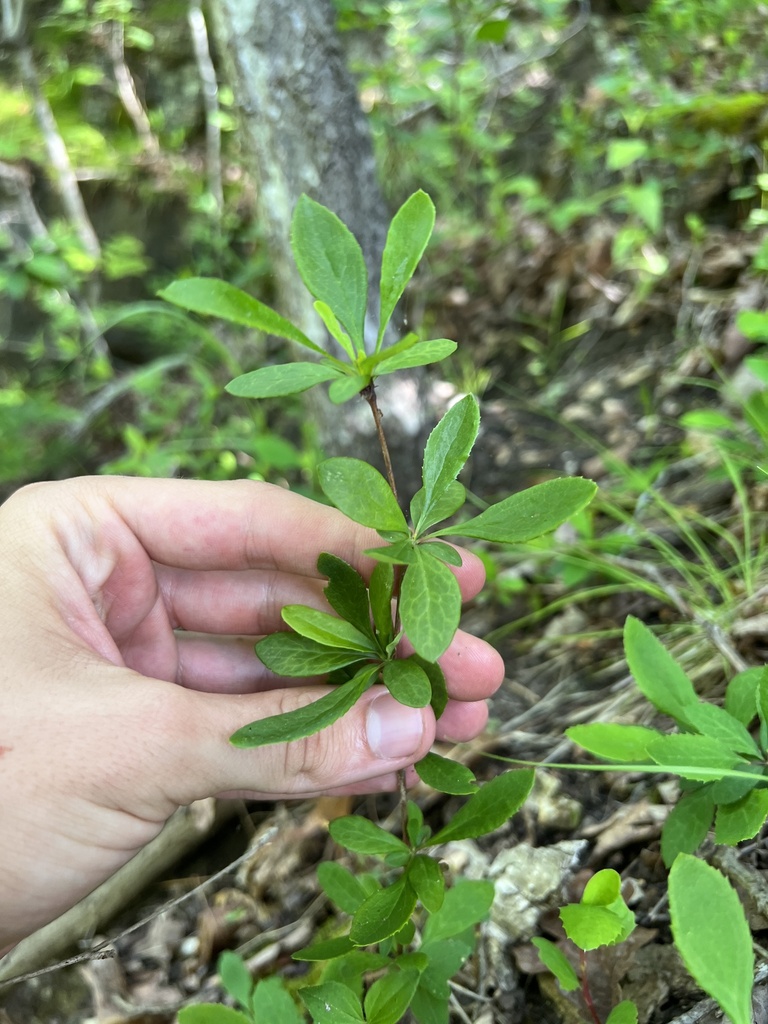
Berberis canadensis
- Origin
- North America
- Part used
- See detailed notebook
- Tradition
- Traditional ethnobotany
An unassuming cousin of the European barberry, Berberis canadensis grows wild in the open woodlands and hedgerows of eastern North America. Traditional Appalachian herbalists and European settlers passed down its use from generation to generation, particularly for its root bark, rich in berberine. Its tart fruit, meanwhile, found a place both in folk pharmacopoeia and on the table.
Traditional uses
Support for the liver and digestion
The root bark, bitter and rich in berberine, was traditionally used to stimulate digestion and support liver function after heavy meals.
External use for minor skin conditions
Bark decoctions or compresses were used locally in folk tradition to soothe certain skin irritation or conditions.
A traditional bitter fever remedy
Like other barberries rich in bitter alkaloids, this species has been reported in tradition as a bitter tonic used for mild fever or convalescence.
Tart fruits as a tonic
The very sour berries were sometimes turned into syrups or jams, valued as a light tonic and a source of tart freshness in late summer.
Before you use it
Contains berberine, an active alkaloid: internal use of the bark or root is discouraged without the advice of a health professional. Strongly discouraged during pregnancy and breastfeeding because of the uterus-stimulating properties historically reported for barberries. Do not give to young children. Possible interactions with certain medications (anticoagulants, blood-sugar-lowering drugs): seek advice before any internal use.
The detailed notebook
- Prepared as a paste or decoction
- Traditional duration of use
- Known contraindications
- Related species and their uses
Where to find it
Partner herbalists — available with the detailed notebook.
Sources
PFAF