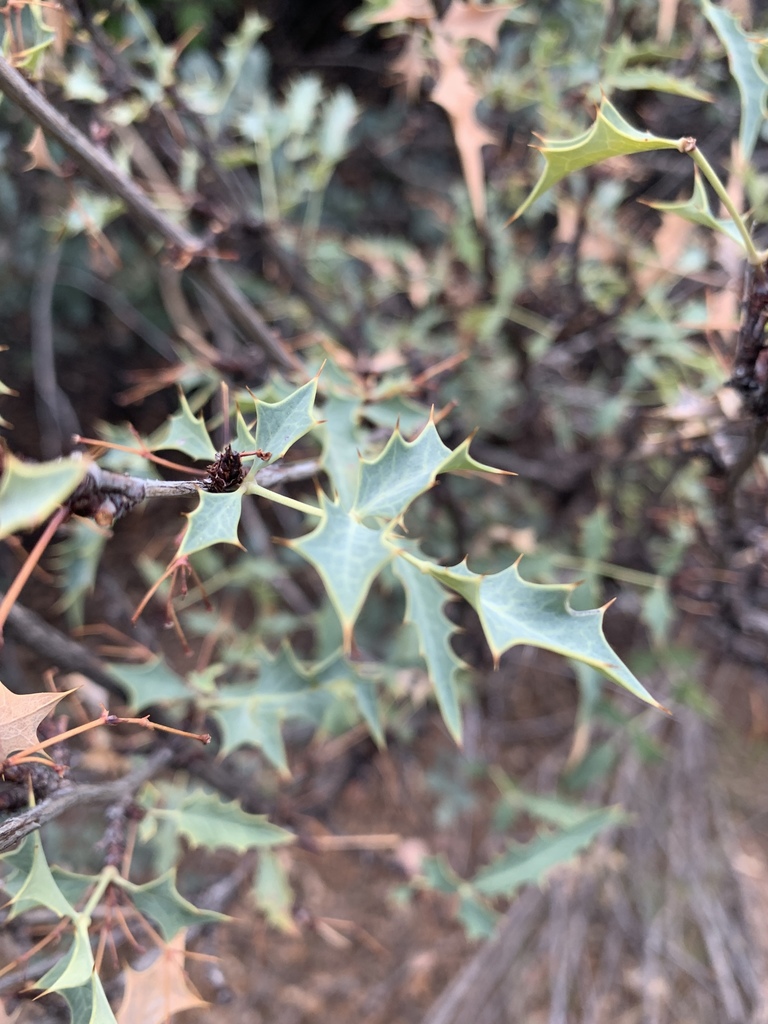
Berberis haematocarpa
- Origin
- North America
- Part used
- See detailed notebook
- Tradition
- Traditional ethnobotany
Among the arid scrublands of the American Southwest grows the red barberry, a spiny shrub whose yellow roots and clusters of scarlet berries did not escape the notice of the desert peoples' traditional herbalists. A cousin of the barberries of the Old World, it shares with them that golden bark rich in berberine, long associated with liver and digestive care. Its use remains more discreet today, known mainly to connoisseurs of North American desert flora.
Traditional uses
Support for the liver and digestion
The yellow, bitter root bark was traditionally used as a mild decoction to help with difficult digestion and support liver function, in the manner of other barberries rich in berberine.
External use on the skin
A diluted bark decoction was reportedly used as a wash or compress for irritated skin, in line with the uses attributed to bitter North American barberries.
Dried berries and jams
The very tart purple fruits were gathered by local populations to be dried, made into a paste, or cooked into jam, more as a food resource than as a remedy.
A traditional bitter for fatigue
Like other bitter barberries, the root was sometimes used as a very diluted tea to help with temporary fatigue or convalescence, a use reported but poorly documented scientifically.
Before you use it
The berberine contained in the bark and root is an active alkaloid: its use is discouraged during pregnancy and breastfeeding because of a known risk during these periods. To be avoided in young children without the advice of a health professional. Possible interactions with certain medications (particularly anticoagulants and diabetes treatments): seek the advice of a professional before any internal use. Do not consume the roots or bark without controlled preparation; the ripe berries, meanwhile, are traditionally eaten as food in reasonable amounts.
The detailed notebook
- Prepared as a paste or decoction
- Traditional duration of use
- Known contraindications
- Related species and their uses
Where to find it
Partner herbalists — available with the detailed notebook.
Sources
PFAF