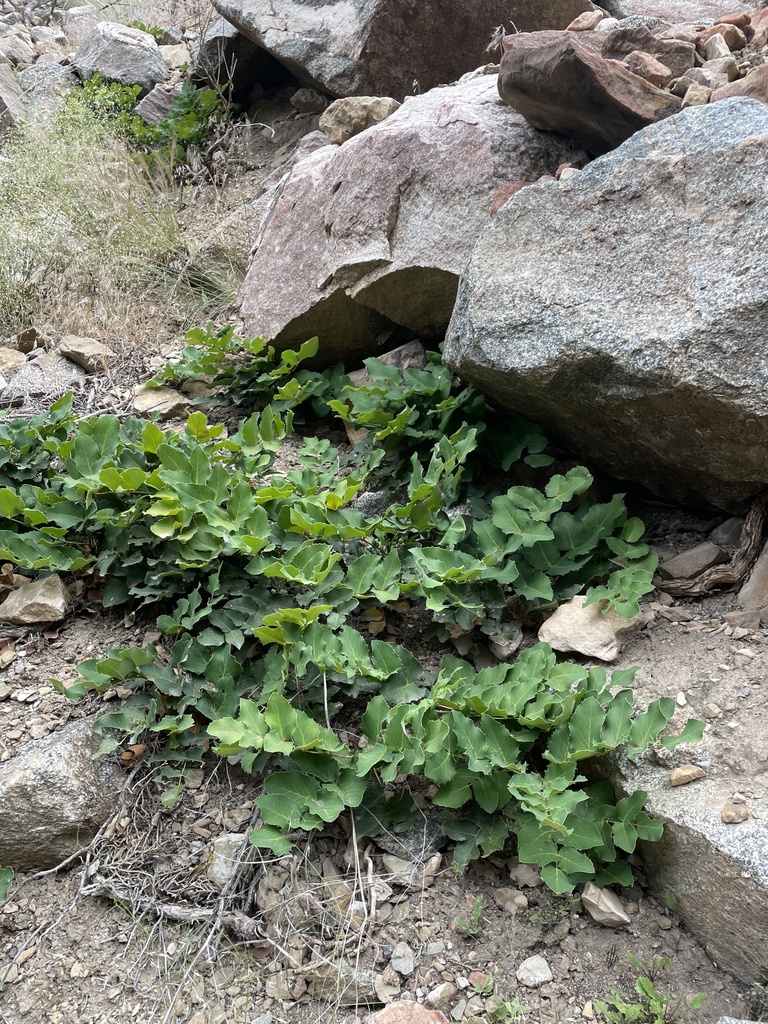
Berberis repens
- Origin
- North America
- Part used
- Root, Stem
- Tradition
- Traditional ethnobotany
Berberis repens, or creeping Oregon grape, grows quietly beneath the pines and scrub of the American West. Indigenous peoples and settlers saw in it, at various times, a bitter tonic, a precious dye, and a remedy for skin ailments. Its bright yellow wood, tinted with berberine, still betrays its old uses today.
Traditional uses
A traditional bitter tonic
The very bitter root was traditionally used as a mild decoction to stimulate the appetite and help with sluggish digestion.
Care for skin conditions
Used externally, preparations made from root or stem traditionally served to soothe certain skin irritation and conditions.
Traditional liver support
In folk uses, the bitter root was associated with supporting liver and bile function, in the manner of other barberry-family plants rich in berberine.
A traditional use for fevers
Certain Indigenous communities used the root decoction as a traditional remedy for feverish states.
Before you use it
A plant rich in berberine: discouraged during pregnancy and breastfeeding because of reported uterotonic properties. Not suitable for young children without the advice of a health professional. Possible interactions with certain medications (anticoagulants, liver or blood-sugar treatments): seek advice before any internal use. Prolonged or high-dose use is discouraged; favor the advice of a qualified herbalist or doctor.
The detailed notebook
- Prepared as a paste or decoction
- Traditional duration of use
- Known contraindications
- Related species and their uses
Where to find it
Partner herbalists — available with the detailed notebook.
Sources
Wikipedia