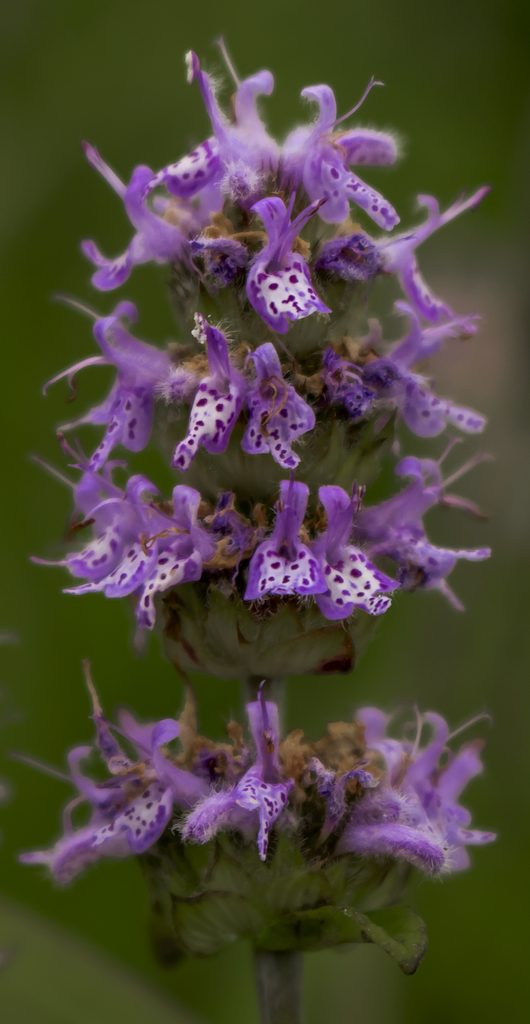
Blephilia ciliata
- Origin
- North America
- Part used
- See detailed notebook
- Tradition
- Traditional ethnobotany
Among the wild mints of the North American prairies, Blephilia ciliata, sometimes called "downy wood mint" or "pagoda mint," held a quiet but steady place in the uses of folk herbalists. Its slender form, topped with purplish flower whorls, and its menthol scent bring it close to the aromatic mint-family plants well known on the Old Continent. Indigenous peoples and the settlers who followed credited it with properties close to those of other mints, though it never gained the renown of its cultivated cousins.
Traditional uses
Easing digestive heaviness
Like many aromatic mint-family plants, this wild mint was infused to help with difficult digestion and calm bloating after meals.
Clearing the airways
Its menthol scent was traditionally used as an inhalation or a hot infusion to relieve colds and clear congested airways.
A calming evening tea
In the manner of other wood mints, it went into evening teas meant to relax and promote peaceful sleep.
Helping with feverish states
Some folk traditions report its use as an infusion to help with mild fevers, in the manner of gentle sudorifics.
Before you use it
A traditional use poorly documented by modern research: to be treated with the caution reserved for poorly studied plants. Avoid in pregnant or breastfeeding women as a precaution, for lack of sufficient data. Do not exceed occasional, moderate consumption in the absence of solid scientific experience. Seek the advice of a health professional before any prolonged use, particularly in children.
The detailed notebook
- Prepared as a paste or decoction
- Traditional duration of use
- Known contraindications
- Related species and their uses
Where to find it
Partner herbalists — available with the detailed notebook.
Sources
PFAF, Wikipedia