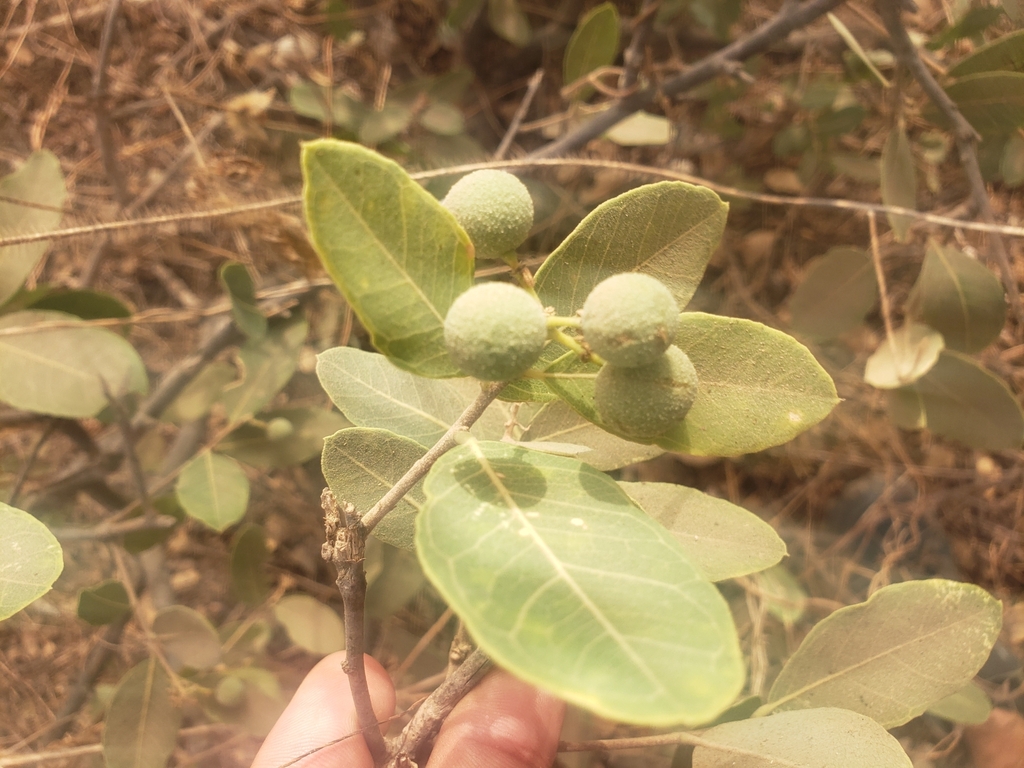
Boscia senegalensis
- Origin
- Africa
- Part used
- Seeds / fruit, Root
- Tradition
- Traditional ethnobotany
A hardy shrub of the Sahelian zones, Boscia senegalensis has long been a precious resource for the peoples of the Sahel, particularly during periods of famine. Its seeds, long prepared through meticulous processes to remove their bitterness, have fed generations, while its root found a place in local traditional pharmacopeia. A plant of survival and memory, still little known outside its continent of origin.
Traditional uses
Seeds eaten during periods of famine
Traditionally, seeds freed of their bitterness through successive soakings were eaten as a porridge or mixed with other grains during lean periods or droughts.
Root used for digestive troubles
The root was used as a decoction in certain traditional West African pharmacopeia to relieve digestive and intestinal troubles.
A traditional use against fever
Preparations made from root or seeds have been reported in traditional Sahelian medicine to soothe certain feverish states.
Traditional skin applications
Certain preparations made from the plant were applied locally as part of traditional skin care, according to locally reported but loosely formalized uses.
What to know before use
Raw seeds are bitter and contain potentially toxic compounds; they require rigorous traditional processing (soaking, repeated cooking) before any consumption. No use should be attempted without the guidance of someone specifically familiar with the traditional preparation methods. Not recommended for pregnant or breastfeeding women, as well as children, in the absence of sufficient safety data. Do not use as a substitute for medical treatment; consult a health professional before any use, particularly for the root, whose chemical composition remains little documented.
The detailed notebook
- Prepared as a paste or decoction
- Traditional duration of use
- Known contraindications
- Related species and their uses
Where to find it
Partner herbalists — available with the detailed notebook.
Sources
PFAF, Wikipedia