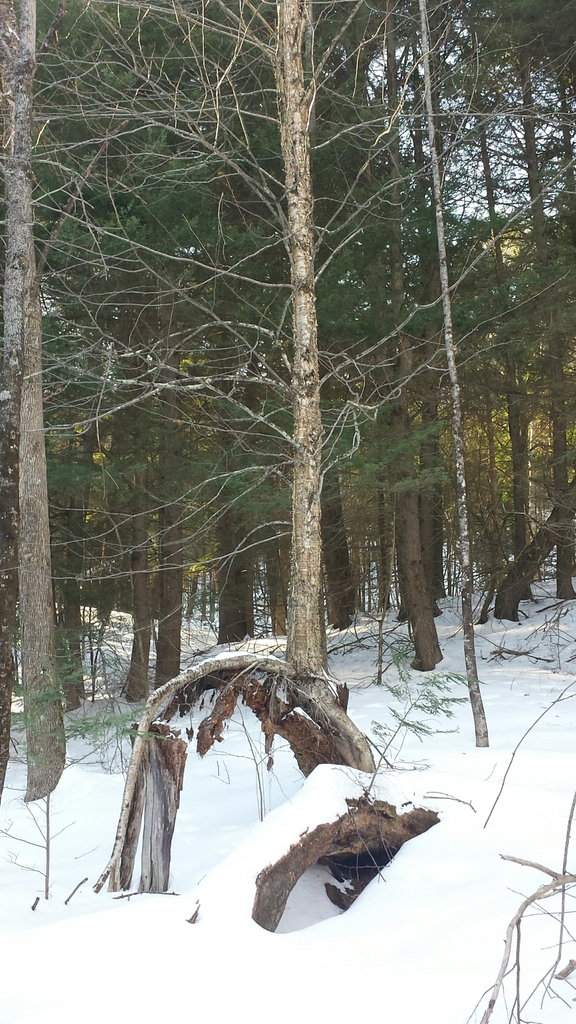
yellow birch
- Origin
- North America
- Part used
- Leaves, Bark
- Tradition
- Traditional ethnobotany
Yellow birch, a majestic tree of the cold forests of North America, was revered by many Indigenous peoples, who used its fragrant bark and leaves for many purposes. Its characteristic wintergreen scent, due to the natural presence of methyl salicylate, set it apart from other birches and earned it a particular place in herbalist traditions. European settlers in turn inherited certain uses, blending Indigenous knowledge with folk practices.
Traditional uses
Traditional rubs for pain
The bark, because of its scent and properties close to those of wintergreen, was traditionally used externally to relieve muscle and joint pain.
A digestive and cleansing infusion
The leaves were infused by traditional herbalists to help with digestion and promote elimination, for a so-called "cleansing" purpose typical of spring treatments.
Traditional skin care
As a decoction or a compress, the leaves and bark were used locally to soothe certain minor skin irritation.
A traditional use for colds
Certain Indigenous communities reported the use of preparations made from bark or leaves during seasonal colds, as general support for the body.
Before you use it
The bark naturally contains methyl salicylate, related to aspirin: to be avoided in cases of salicylate allergy, anticoagulant treatment, or in people on long-term medication. External use of concentrated bark preparations is discouraged on broken skin or in large amounts, because of the risk of irritation. Discouraged for pregnant or breastfeeding women as well as young children, for lack of sufficient safety data. Any essential oil obtained from the bark is highly concentrated in methyl salicylate and must never be ingested or applied undiluted; the advice of a professional is essential before any use.
The detailed notebook
- Prepared as a paste or decoction
- Traditional duration of use
- Known contraindications
- Related species and their uses
Where to find it
Partner herbalists — available with the detailed notebook.
Sources
PFAF, Wikipedia