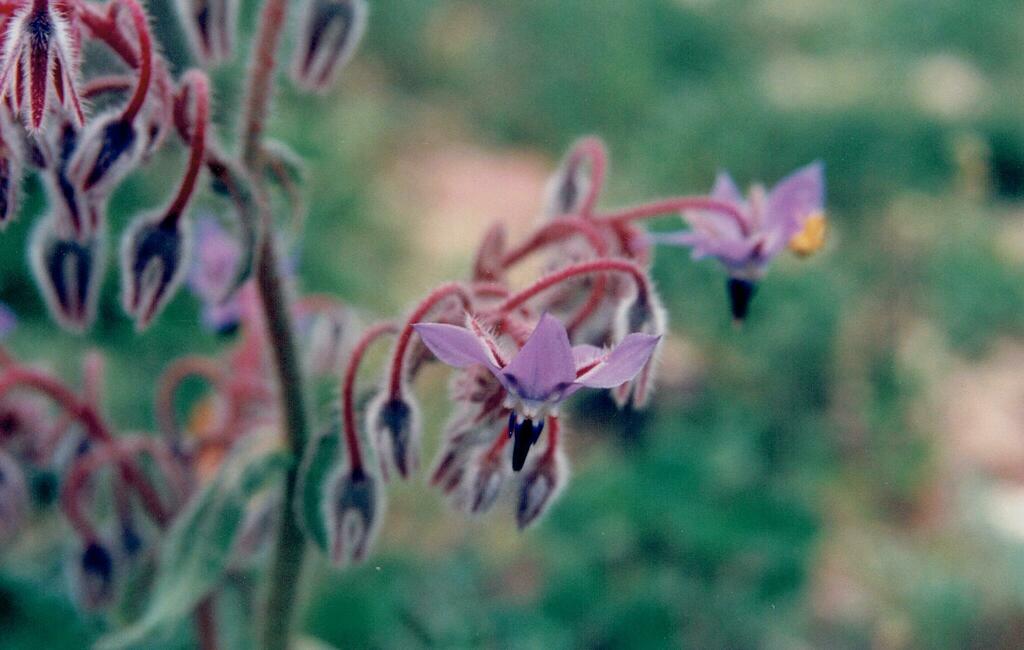
Borage
- Origin
- Europe
- Part used
- See detailed notebook
- Tradition
- Traditional ethnobotany
In our grandmothers' gardens, borage unfurled its deep blue flowers, valued for attracting bees as much as for brightening summer salads. Native to the Mediterranean basin, this familiar plant of European vegetable gardens was long used by herbalists to soothe fevers and calm irritated skin. Its very name, from the Latin "borra" (rough hair), recalls the fuzzy texture of its leaves, in contrast with the delicacy of its traditional uses.
Traditional uses
Soothing for dry skin
Oil extracted from borage seeds was traditionally used to nourish dry or irritated skin. It featured in popular ointments in the family pharmacopoeia.
Support during fevers and colds
Infused flowers were said to promote sweating and bring mild comfort during colds, according to old folk uses.
Comfort for the menstrual cycle
Borage oil is traditionally associated, in more recent folk use, with women's comfort during hormonal changes, particularly as a dietary supplement.
A mild diuretic effect reported
Herbalists of the past attributed to borage mildly diuretic and detoxifying virtues, used to accompany spring cures.
Before you use it
Borage contains pyrrolizidine alkaloids, potentially toxic to the liver with prolonged or high-dose use: professional advice is essential before any regular internal use. Not advised during pregnancy and breastfeeding due to its hormonally active and potentially toxic compounds. Avoid in people with liver conditions or taking anticoagulant medication. Do not use in young children without medical advice.
The detailed notebook
- Prepared as a paste or decoction
- Traditional duration of use
- Known contraindications
- Related species and their uses
Where to find it
Partner herbalists — available with the detailed notebook.
Sources
PFAF