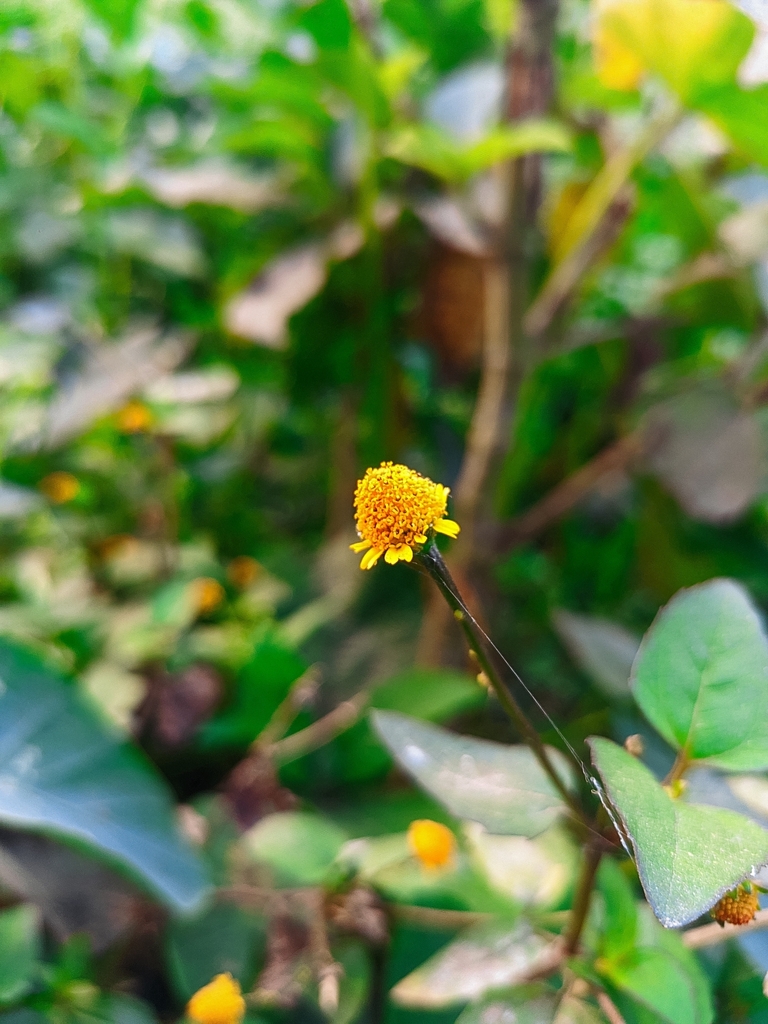
Jambu (toothache plant)
- Origin
- South America
- Part used
- Leaves
- Tradition
- Traditional ethnobotany
Native to the Amazonian lowlands, jambu was carried along trade routes to the gardens of the Indian Ocean, where it became a familiar vegetable in Creole cuisine. Its small yellow flower buds, nicknamed “Pará cress,” conceal a pungent, slightly numbing flavor that has long intrigued herbalists as much as cooks. Today it is found as much in the vegetable garden as in old notebooks of popular remedies.
Traditional uses
What to know before use
Can cause marked oral numbness, excessive salivation, or tingling; use in moderation. Not recommended for pregnant or breastfeeding women, due to insufficient safety data. Avoid in young children due to the risk of an overly pronounced local numbing effect. Consult a healthcare professional before any prolonged or therapeutic use, particularly if undergoing medication treatment.
The detailed notebook
- Prepared as a paste or decoction
- Traditional duration of use
- Known contraindications
- Related species and their uses
Where to find it
Partner herbalists — available with the detailed notebook.
Sources
PFAF, PubMed, Wikipedia