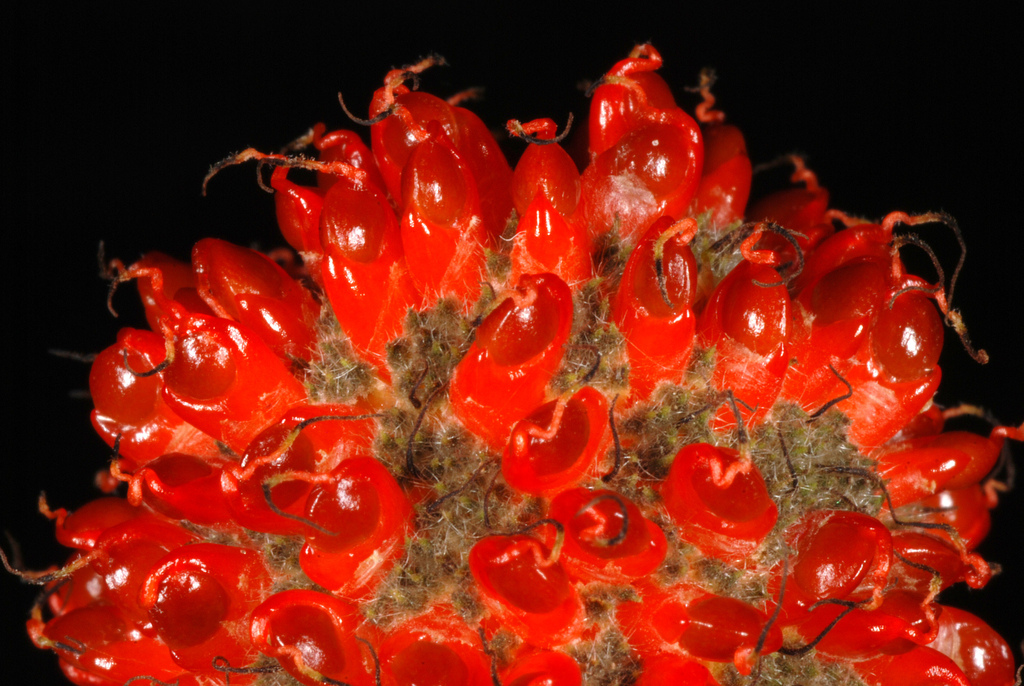
Broussonetia papyrifera
- Origin
- Asia
- Part used
- See detailed notebook
- Tradition
- Traditional ethnobotany
Native to the Far East, the paper mulberry has accompanied Asian artisans and herbalists for centuries. Its fibrous bark, famous for making washi paper and Polynesian tapa cloth, also conceals a long tradition of internal uses, notably in ancient Chinese medicine where the fruit was considered a tonic.
Traditional uses
A traditional tonic fruit
In ancient Chinese pharmacopeia, the dried fruit of Broussonetia papyrifera (Chu Shi Zi) was used as a tonic, reputed to support vitality and eyesight in the elderly.
Bark and sap on the skin
Sap and bark were traditionally applied externally to soothe certain skin irritations and promote superficial healing.
Traditional kidney support
The fruit was associated, in traditional Chinese medicine, with support for kidney function and the back, a notion to be understood according to that medicine's energetic theory rather than in the modern biomedical sense.
Mild traditional digestive use
A light decoction of bark or fruit was sometimes traditionally used to help with difficult digestion, within a folk medicine context.
What to know before use
Internal use should be reserved for supervision by a health professional or trained practitioner, as modern safety data is limited. Pregnancy and breastfeeding: avoid for lack of reliable safety data. Do not use in children without specialist advice. Fresh sap can be irritating for certain sensitive skin; a preliminary skin test is recommended.
The detailed notebook
- Prepared as a paste or decoction
- Traditional duration of use
- Known contraindications
- Related species and their uses
Where to find it
Partner herbalists — available with the detailed notebook.
Sources
PFAF