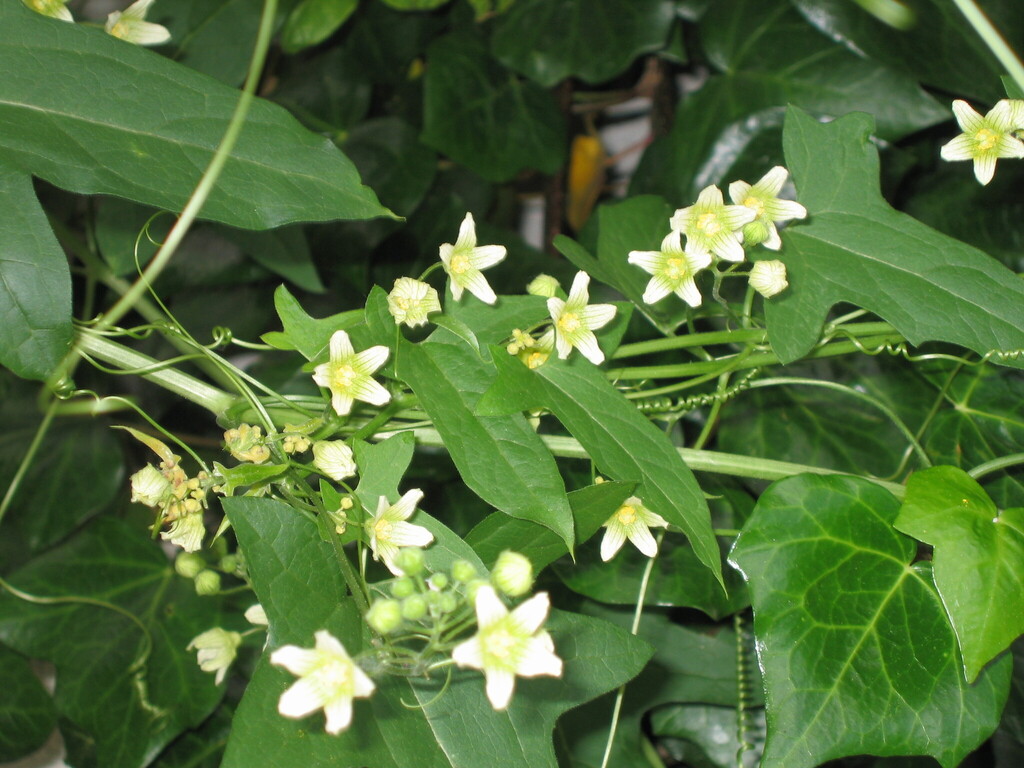
White Bryony
- Origin
- Europe
- Part used
- See detailed notebook
- Tradition
- Traditional ethnobotany
A climber of hedgerows and woodland edges, white bryony was long nicknamed the 'devil's turnip' or 'white vine' by the European countryside, which feared as much as it used its large tuberous root. Old herbalists classed it among the powerful remedies, reserved for experienced hands, so much did its use demand caution and precise knowledge.
Traditional uses
Poultice for joint pain
The grated root was traditionally applied as a poultice to painful joints or rheumatism, acting as a local counter-irritant.
Old use for lung ailments
In the past, very weak preparations made from the dried root were used in certain rural areas for stubborn coughs, a use now abandoned due to its toxicity.
Folk remedy for livestock
In several rural regions, white bryony was used in traditional veterinary medicine, particularly for colic in livestock, a use now fallen out of practice.
Rubs for bruises and contusions
The root, prepared as a macerate, was sometimes used as an external rub to help bruises and contusions heal.
Before you use it
A plant toxic in all its parts, particularly the root and the red berries, which can be fatal if ingested, especially in children. Internal use strongly discouraged without the supervision of a healthcare professional qualified in herbal medicine. Contraindicated during pregnancy and breastfeeding due to irritant and potentially abortive properties historically reported. Prolonged contact with the fresh root can cause skin irritation; avoid any use on damaged skin.
The detailed notebook
- Prepared as a paste or decoction
- Traditional duration of use
- Known contraindications
- Related species and their uses
Where to find it
Partner herbalists — available with the detailed notebook.
Sources
PFAF