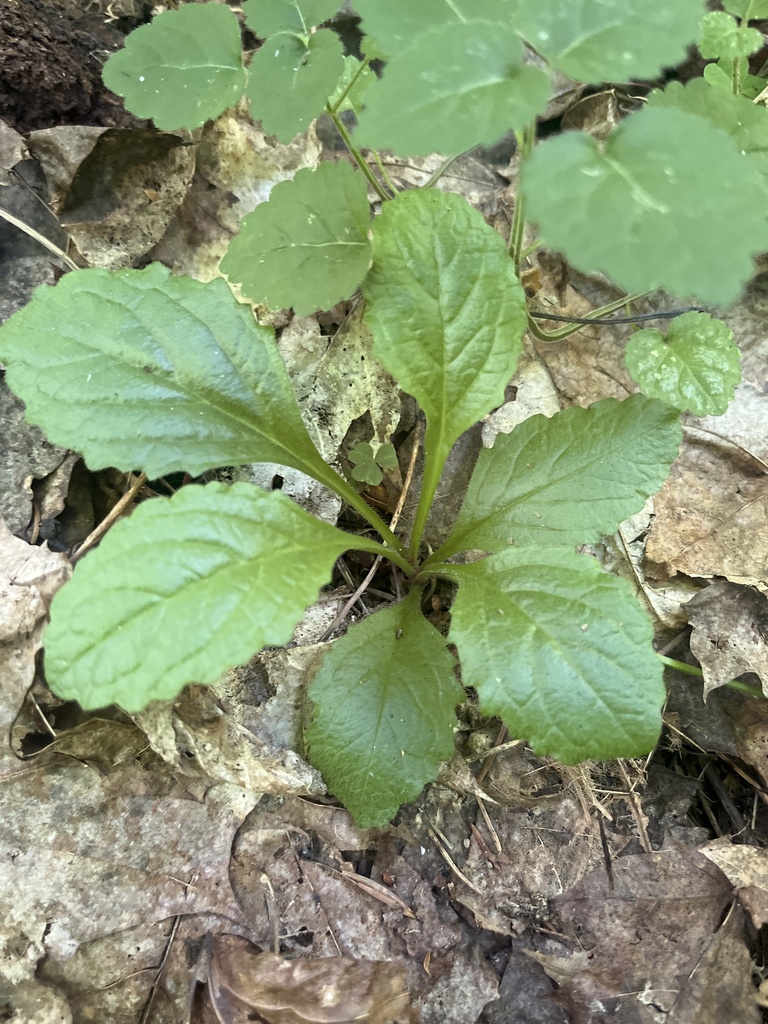
Creeping Bugle
- Origin
- Europe
- Part used
- Leaves, Root
- Tradition
- Traditional ethnobotany
Discreet beneath hedgerows and along shaded paths, creeping bugle carpets the ground with its blue-tinged rosettes as soon as spring arrives. Old herbalists knew it as a ‘vulnerary’ plant, good for soothing irritated throats and minor wounds. Its very name, derived from the Latin *abigere* (to drive away), recalls that it was credited with the power to ward off certain ailments.
Traditional uses
Soothing the throat and cough
Creeping bugle was traditionally infused to soothe throat irritation and accompany mild coughs, particularly in the European countryside where it grew abundantly.
Care for minor wounds
Used externally, the crushed fresh leaf or an infusion applied as a compress served to clean and calm small cuts, grazes, and skin irritations.
Mild astringency
Thanks to its tannins, the plant was sometimes used as a tea for its gentle astringent effect, useful for mild, passing digestive discomfort.
Traditional gargles
Bugle decoctions were once used as a gargle for oral hygiene and the comfort of sensitive gums.
Before you use it
Avoid prolonged use without a healthcare professional's advice, due to insufficient long-term data. As a precaution, avoid use during pregnancy or breastfeeding, in the absence of reliable studies. Discontinue in case of an unusual skin or digestive reaction. Do not exceed occasional, moderate traditional use.
The detailed notebook
- Prepared as a paste or decoction
- Traditional duration of use
- Known contraindications
- Related species and their uses
Where to find it
Partner herbalists — available with the detailed notebook.
Sources
Wikipedia