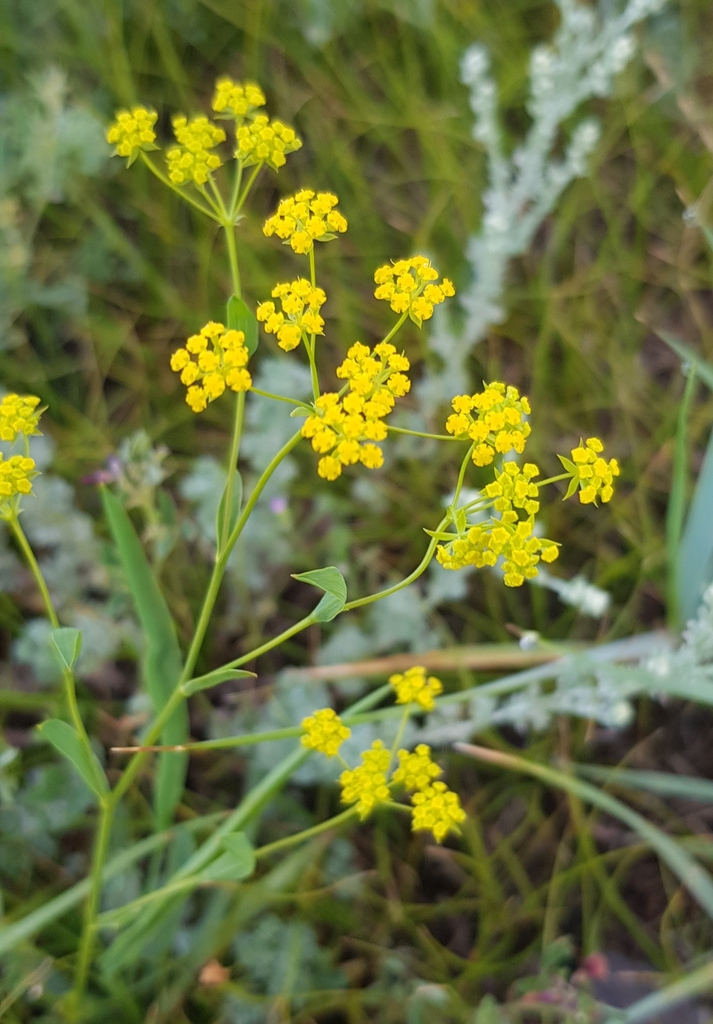
Bupleurum scorzonerifolium
- Origin
- Asia
- Part used
- See detailed notebook
- Tradition
- Traditional ethnobotany
On the high plateaus and dry grasslands of East Asia grows Chai Hu, a discreet root that Chinese herbalists have recorded since ancient times among the major remedies intended to "move" the body's energy. A cousin of Bupleurum falcatum, this hillside plant holds a place of honor in traditional Chinese pharmacopeia, where it is reputed for its harmonizing action on the liver and emotions. Its scientific name, Bupleurum scorzonerifolium, recalls the resemblance of its slender leaves to those of scorzonera.
Traditional uses
Soothing nervous tension
Traditional Chinese medicine credits Bupleurum root with the ability to unblock stagnant "Liver Qi," often associated with irritability, frequent sighing, and emotional tension.
Traditional digestive support
Used in formulas combined with other plants, the root was traditionally used to relieve bloating and a feeling of tightness in the chest and abdomen.
Use during intermittent fevers
Ancient Chinese texts mention this root in preparations intended to help with feverish states alternating hot and cold, particularly at the onset of illness.
Balance of the female cycle
Combined with other plants in classic formulas, it was traditionally used to help with menstrual irregularities linked to energetic stagnation.
What to know before use
A plant to be reserved for supervised use by a practitioner trained in traditional Chinese medicine or a health professional, due to its potent action and the complexity of the formulas it belongs to. Not recommended for pregnant or breastfeeding women, for lack of reassuring data. Interactions with certain medications (particularly those affecting the liver or hepatic metabolism) are possible; medical advice is essential if undergoing treatment. Prolonged use or an unsuitable dose can place heavy demands on the liver; any use should remain occasional and supervised.
The detailed notebook
- Prepared as a paste or decoction
- Traditional duration of use
- Known contraindications
- Related species and their uses
Where to find it
Partner herbalists — available with the detailed notebook.
Sources
PFAF