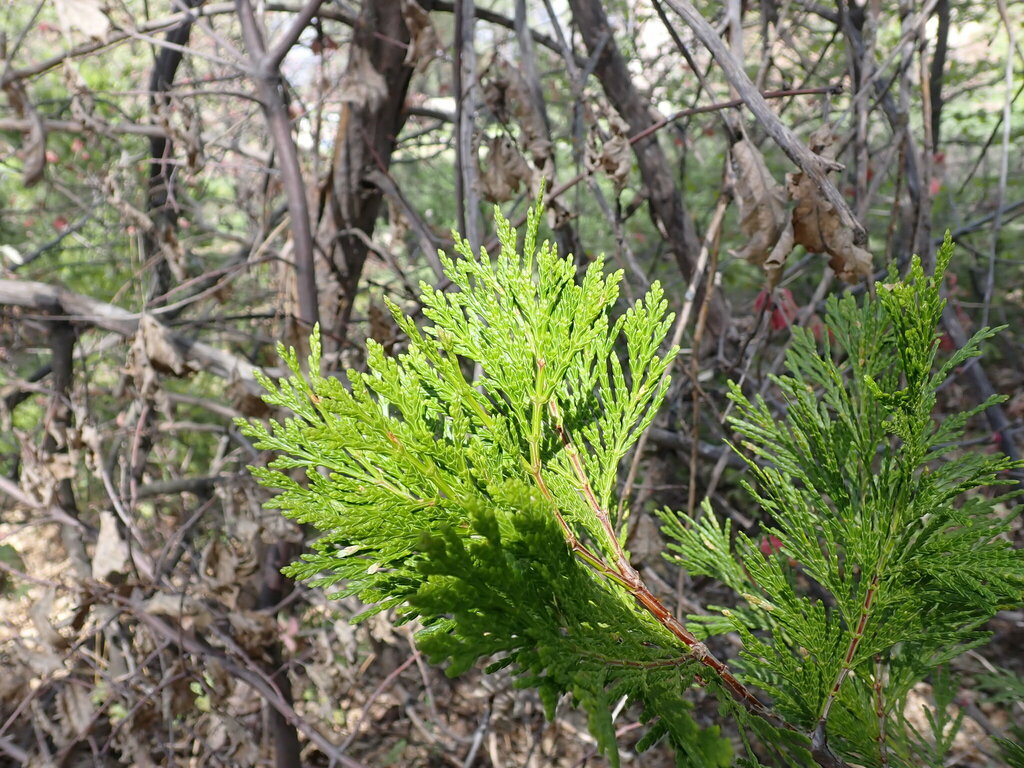
Calocedrus decurrens
- Origin
- North America
- Part used
- See detailed notebook
- Tradition
- Traditional ethnobotany
Incense cedar, a tall conifer of the mountains of the American West, was revered by Indigenous peoples for its fragrant, durable wood, often chosen for making tools, bows, and for ritual fumigation. Its resinous scent, close to that of cedar, earned it a place of honor in traditional uses tied to purification and the protection of dwellings.
Traditional uses
Traditional fumigation
The wood and dried foliage were burned in fumigations to purify the air of a place or living space, according to practices widespread among several Indigenous peoples of North America.
Inhaled balsamic vapors
The vapors given off by the fresh or dried foliage were traditionally inhaled to clear the airways, in the manner of other aromatic conifers.
A soothing external use
A preparation made from the foliage was sometimes applied externally to the skin, for traditional purposes of hygiene and care, without precise medical documentation.
A traditional repellent
The fragrant wood of incense cedar was used to make chests and cabinets, its scent traditionally reputed to keep insects and moths away.
Before you use it
The essential oil and aromatic compounds of this plant can irritate the skin and mucous membranes if used concentrated or for a prolonged period. Internal use is not reliably documented and is discouraged without the advice of a qualified health professional. Avoid any use in pregnant or breastfeeding women, as well as young children, for lack of sufficient safety data. Fumigation in an enclosed, poorly ventilated space can cause respiratory discomfort; always air out the room.
The detailed notebook
- Prepared as a paste or decoction
- Traditional duration of use
- Known contraindications
- Related species and their uses
Where to find it
Partner herbalists — available with the detailed notebook.
Sources
PFAF, Wikipedia