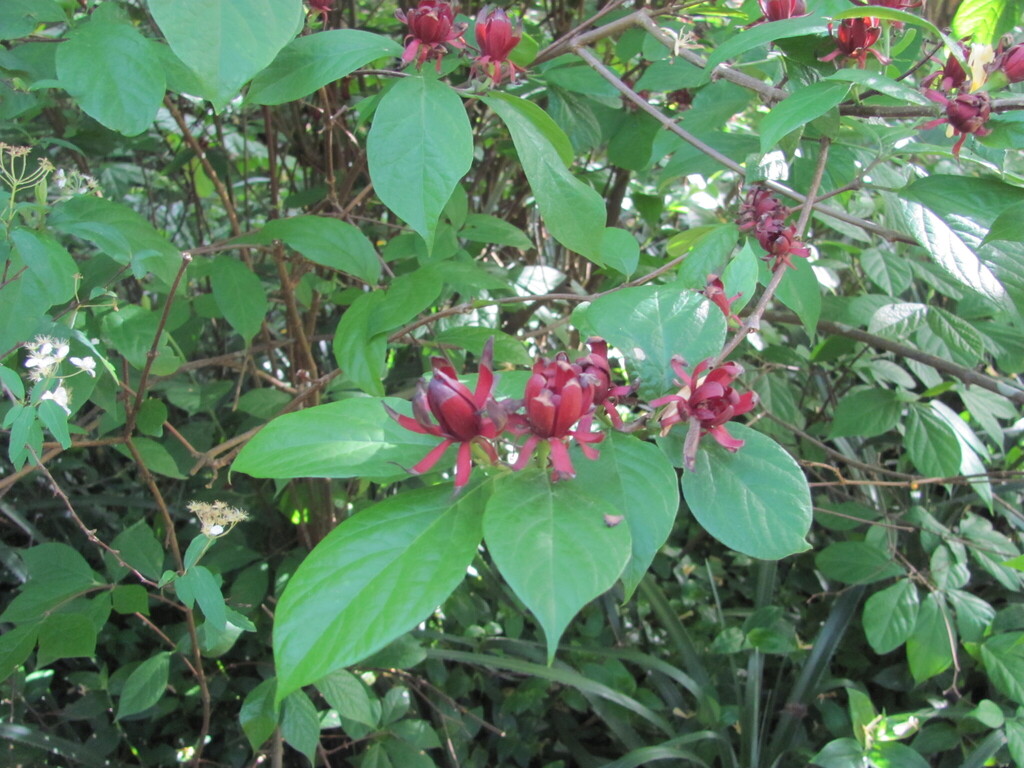
Calycanthus
- Origin
- North America
- Part used
- Flowers, Root, Bark
- Tradition
- Traditional ethnobotany
Calycanthus, a shrub with purple, fragrant flowers, grows in the damp undergrowth of eastern North America, where Native American tribes had long known it. Its bark and roots, rich in alkaloids close to strychnine, made it a plant for cautious use, reserved for the experienced hands of traditional healers. Today it is grown mainly for the pleasure of its scent, its internal use having been largely abandoned.
Traditional uses
A traditional bitter tonic
The bark and root were sometimes used in very small amounts by certain Native American herbalists as a bitter tonic, reputed to stimulate the appetite and digestion.
A soothing external use
Preparations made from bark or flowers could be applied as a compress to the skin, in a traditional external use reported locally.
Flowers for the air
The highly fragrant flowers were traditionally dried and placed in dwellings or among linens for their scent, a use more about well-being than healing.
Particular caution in children
Some sources report a very limited traditional use with children, but the potential toxicity of the alkaloids present calls for extreme caution and rules out any unsupervised use.
Before you use it
The plant contains calycanthine-type alkaloids, close to strychnine, which can cause convulsions at excessive doses: any internal use must be supervised by a qualified professional. Never use with children or pregnant or breastfeeding women without specialized medical advice, given the documented toxic risk. Avoid any self-medication with fresh or dried root or bark without precise identification and dosing. Do not confuse it with other ornamental shrubs; when in doubt about identification, refrain from any harvesting intended for internal use.
The detailed notebook
- Prepared as a paste or decoction
- Traditional duration of use
- Known contraindications
- Related species and their uses
Where to find it
Partner herbalists — available with the detailed notebook.
Sources
PFAF, Wikipedia