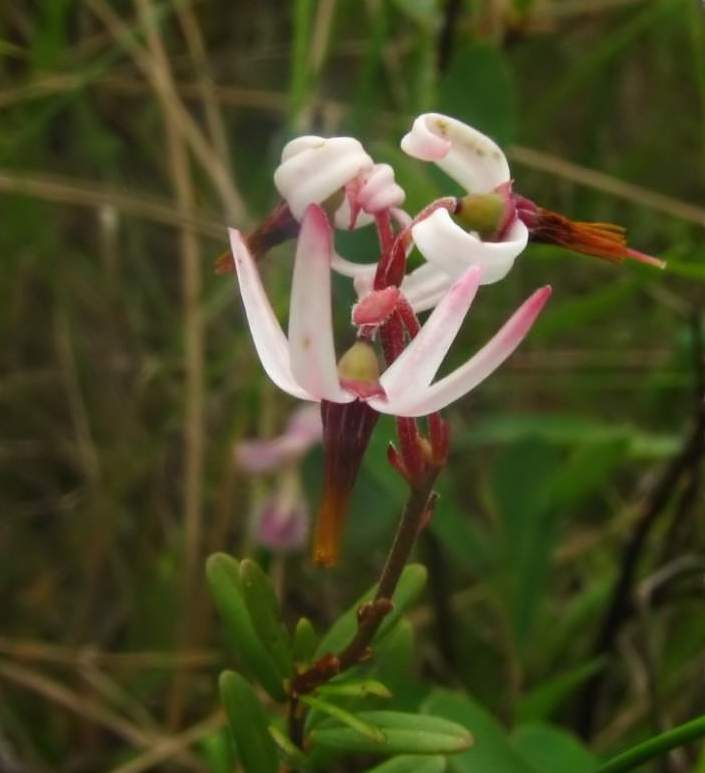
Cranberry
- Origin
- North America
- Part used
- See detailed notebook
- Tradition
- Traditional ethnobotany
A red, tart fruit of North America's cold peat bogs, the cranberry was already part of the Indigenous diet long before European settlers arrived. The settlers learned from them how to make preserves, poultices, and drinks from it, crediting it with tonic and purifying properties that folk tradition has kept alive to this day.
Traditional uses
Support for urinary comfort
Cranberry is traditionally consumed as juice to help with urinary comfort, a use popularized by Indigenous peoples and later widespread across North America.
A tonic, vitamin-rich fruit
Rich in vitamin C, it was traditionally used as a tonic fruit, particularly during long winters, to support overall vitality.
A soothing poultice for minor wounds
The crushed berries were sometimes applied as a poultice by Native Americans to superficial wounds or stings, for a soothing purpose.
A fruit rich in polyphenols
Its deep red color is traditionally associated with a richness in antioxidant compounds, which made it a prized fruit in preparations kept for winter.
Before you use it
People undergoing anticoagulant treatment (particularly warfarin-based) should seek the advice of a health professional before regular consumption, because of known interactions. In cases of a history of kidney stones (oxalate), excessive consumption should be avoided and medical advice is recommended. Prefer pure, unsweetened juices, as cranberry is often sold heavily sweetened, which lessens its traditional value. Do not substitute this traditional use for medical treatment in cases of a confirmed or recurring urinary infection.
The detailed notebook
- Prepared as a paste or decoction
- Traditional duration of use
- Known contraindications
- Related species and their uses
Where to find it
Partner herbalists — available with the detailed notebook.
Sources
Wikipedia