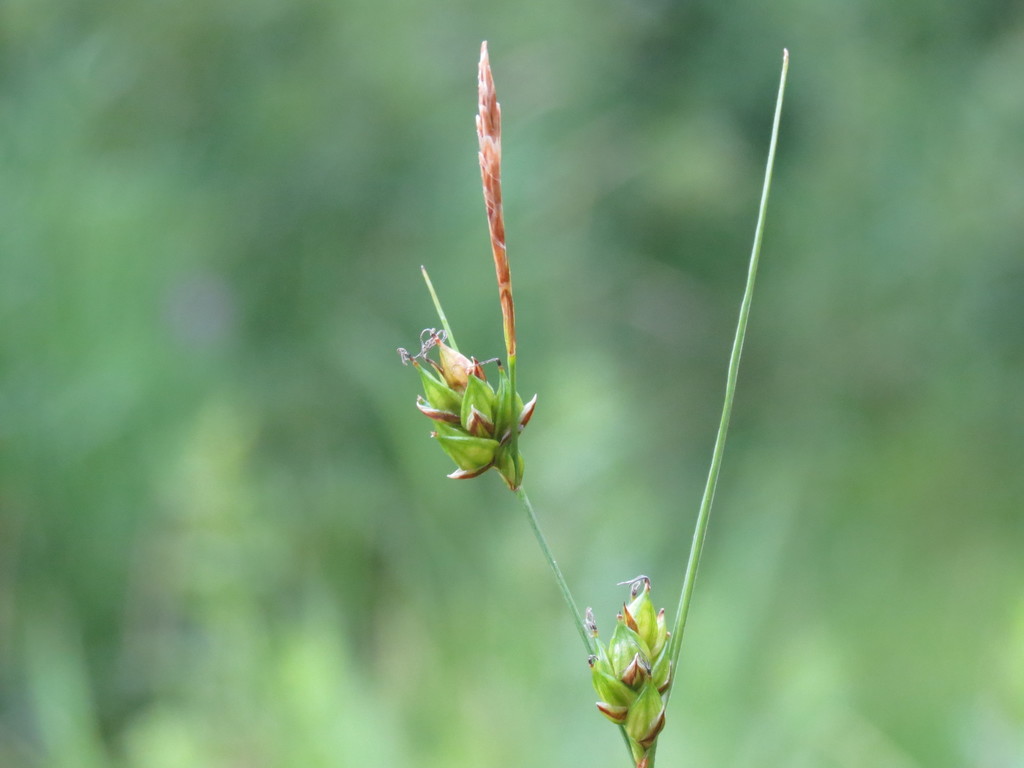
Carex oligosperma
- Origin
- North America
- Part used
- See detailed notebook
- Tradition
- Traditional ethnobotany
A quiet inhabitant of the peat bogs and marshes of northern America, Carex oligosperma never held a place of honor in herbalist notebooks. The Indigenous peoples of boreal regions knew this sedge mainly for its practical uses rather than for curative properties. Its place in the Herbier des Anciens owes more to its ecological and ethnobotanical value than to a rich medicinal tradition.
Traditional uses
Basketry and weaving
The long, fibrous leaves of this bog sedge were reportedly used by certain Indigenous groups to weave mats or rudimentary cordage.
A seasonal fodder resource
In the wetlands of the North, this plant was among the tall grasses sometimes cut to feed livestock, particularly before peat bogs were drained for farming.
An indicator plant of peat bogs
Its presence traditionally served as a marker for gatherers and trappers to identify boggy areas, rich in other sought-after plant resources.
Before you use it
The internal or medicinal uses of this plant are not reliably documented; no consumption can be recommended. Confusion with other sedges or wetland plants is possible and can carry risks; certain botanical identification is essential before any handling. The peat bogs where this species grows are often fragile and sometimes protected habitats: check local regulations before any harvesting. In the absence of solid documentation of any effects, the advice of a health professional or a qualified botanist is recommended before any use.
The detailed notebook
- Prepared as a paste or decoction
- Traditional duration of use
- Known contraindications
- Related species and their uses
Where to find it
Partner herbalists — available with the detailed notebook.
Sources
PFAF, Wikipedia