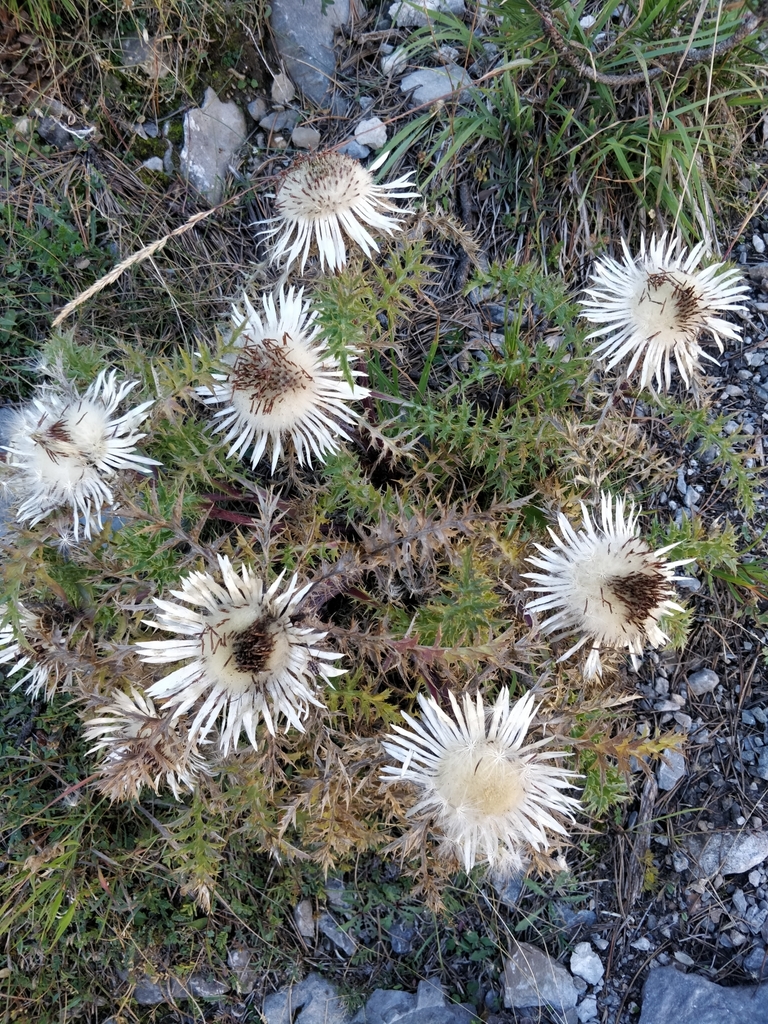
Stemless carline thistle
- Origin
- Europe
- Part used
- Root
- Tradition
- Traditional ethnobotany
A small rosette lying low in the short grass of mountain pastures, the stemless carline thistle was long nicknamed the ‘shepherd's barometer,’ for its bracts close up as rain approaches. In the herbals of mountain herbalists, its root held a place of honor, reputed to support digestion and purify the body as winter drew to a close.
Traditional uses
Support for slow digestion
Carline root was traditionally used to stimulate a sluggish appetite and ease difficult digestion, particularly after heavy meals.
A purifying spring cure
Considered depurative, it featured in spring cures meant to ‘cleanse the blood,’ according to the folk tradition of alpine regions.
Traditional use for skin conditions
Used externally, a root decoction was sometimes applied as a compress to irritated skin, in certain old rural practices.
Traditional support for the respiratory tract
Some mountain herbal records mention its use to help with mild bronchial ailments, alongside other plants.
Before you use it
A protected plant in several regions of Europe: never uproot it in the wild — source it only from a grower or herbalist. Internal use should be reserved for adults, under the advice of a healthcare professional or qualified herbalist, due to a lack of data on safe dosage. Not advised during pregnancy and breastfeeding, for lack of sufficient data. Do not use in children; if taking medication, seek advice before any use.
The detailed notebook
- Prepared as a paste or decoction
- Traditional duration of use
- Known contraindications
- Related species and their uses
Where to find it
Partner herbalists — available with the detailed notebook.
Sources
PFAF, Wikipedia