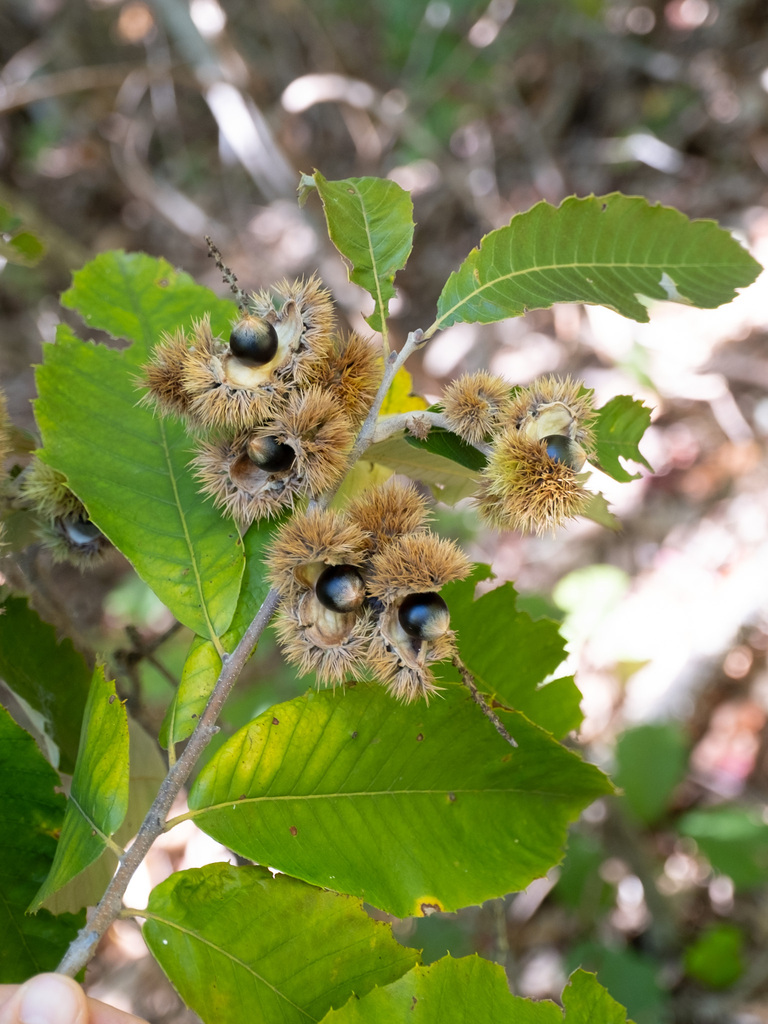
Castanea pumila
- Origin
- North America
- Part used
- Leaves, Stem
- Tradition
- Traditional ethnobotany
The chinquapin, or Castanea pumila, grows in open woodlands of eastern North America, where Indigenous peoples and settlers knew its leaves for easing many everyday ailments. Less famous than its European cousin, it long served as a simple remedy, brewed as an infusion by the fireside, passed down from generation to generation in forest cabins.
Traditional uses
Easing coughs and sore throats
The dried leaves were traditionally infused to calm coughing fits and soothe throat irritation, particularly during seasonal colds.
Care for minor skin conditions
Used externally, a decoction of leaves or stem served to wash irritated or itchy skin, in the rural folk pharmacopoeia.
Light digestive support
A leaf tea was sometimes drunk after meals, reputed to promote lighter digestion and calm minor intestinal discomfort.
A soothing evening tea
Certain rural traditions credited an infusion of chinquapin leaves with a calming property, suited to a moment of relaxation at the end of the day.
Before you use it
Avoid in cases of pregnancy or breastfeeding, for lack of sufficient safety data. Do not exceed occasional, moderate consumption, as the traditional use remains poorly documented scientifically. Discouraged for young children without the advice of a health professional. If undergoing medical treatment, seek the advice of a professional before any prolonged use.
The detailed notebook
- Prepared as a paste or decoction
- Traditional duration of use
- Known contraindications
- Related species and their uses
Where to find it
Partner herbalists — available with the detailed notebook.
Sources
PFAF, Wikipedia