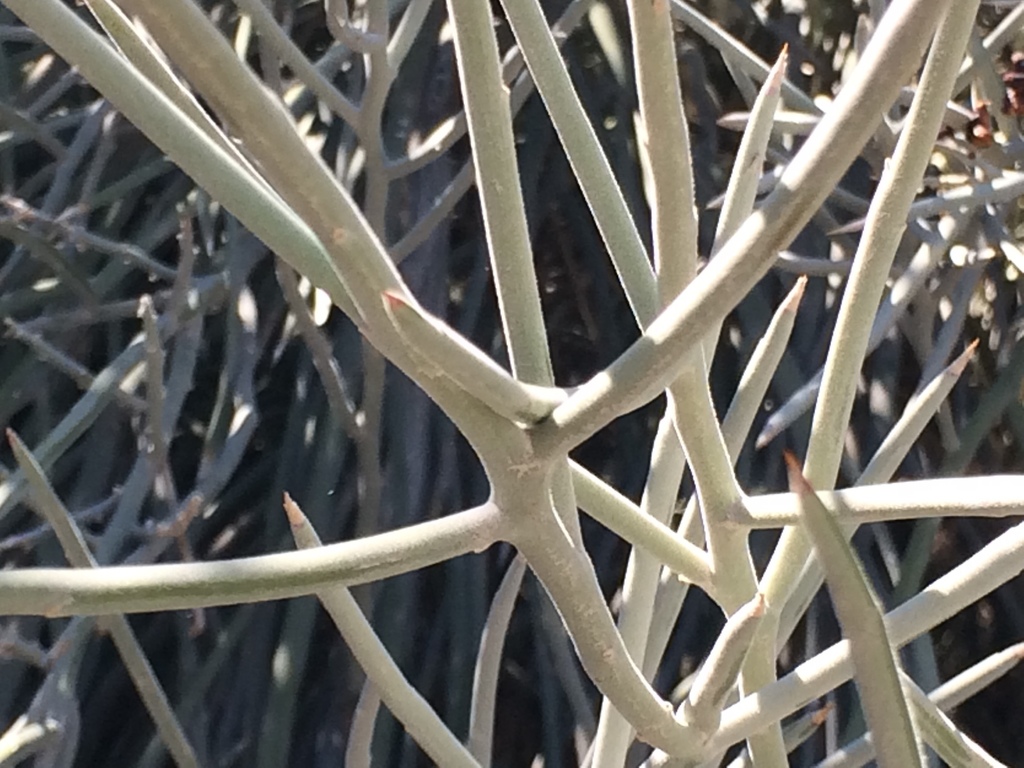
Castela emoryi
- Origin
- North America
- Part used
- See detailed notebook
- Tradition
- Traditional ethnobotany
A quiet shrub of the arid Southwest of North America, Castela emoryi — sometimes called "crucifixion thorn" by old settlers because of its interlacing spiny branches — long intrigued desert herbalists with its pronounced bitterness. The Indigenous peoples of the Sonoran and Mojave deserts knew its uses, passed down to us in fragmentary and poorly documented form.
Traditional uses
A traditional bitter for digestion
The bark and stems, very bitter, were reportedly used as a mild decoction to support sluggish digestion, according to reported but loosely formalized uses.
A traditional use against fevers
Certain desert communities reportedly used this bitter plant as a fever remedy, in keeping with other Simaroubaceae known for this use.
Washes for skin conditions
Diluted decoctions reportedly sometimes served externally, as a wash, for minor irritation or wounds, according to local oral tradition.
A supposed vermifuge property
Like other members of the Simaroubaceae family, Castela emoryi was reportedly associated with a traditional use against intestinal parasites, although this use remains poorly attested in writing.
Before you use it
A plant little studied scientifically: the full chemical composition and toxicity risks are not well established, so caution calls for consulting a professional before any internal use. The bitter substances of the Simaroubaceae can be irritating to the digestive tract at a high dose or with prolonged use. Internal use discouraged in pregnant or breastfeeding women, as well as in children, for lack of safety data. Do not confuse it with other spiny desert species; certain botanical identification is essential before any harvesting.
The detailed notebook
- Prepared as a paste or decoction
- Traditional duration of use
- Known contraindications
- Related species and their uses
Where to find it
Partner herbalists — available with the detailed notebook.
Sources
PFAF