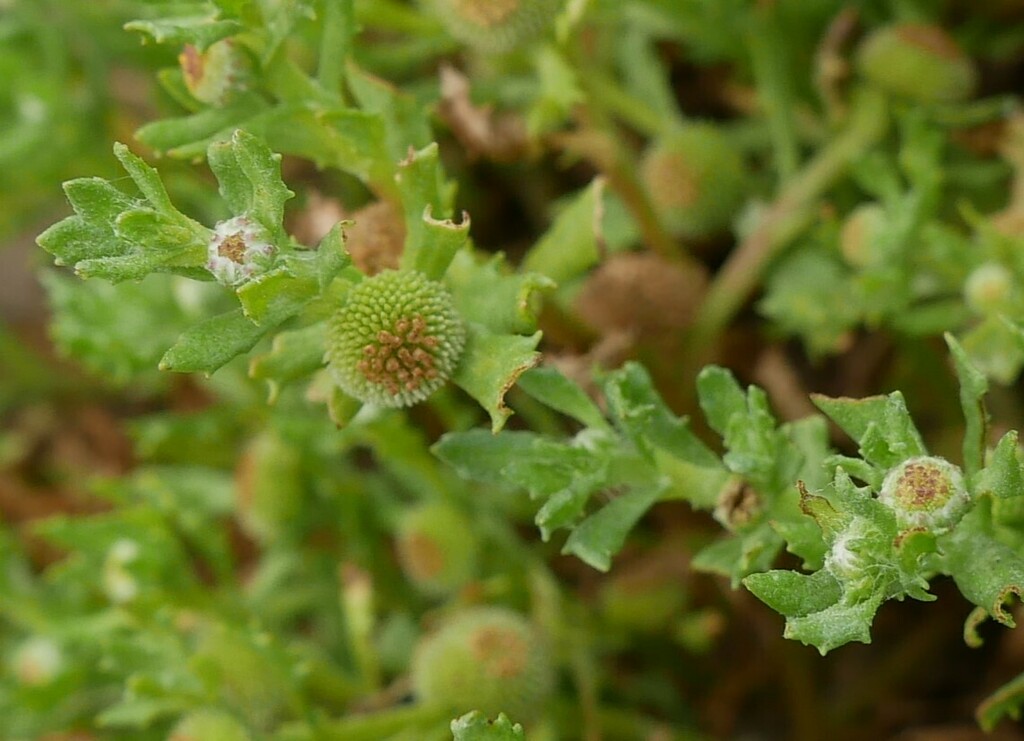
Centipeda cunninghamii
- Origin
- Oceania
- Part used
- See detailed notebook
- Tradition
- Traditional ethnobotany
A small creeping plant of Australia's wetlands, Centipeda cunninghamii, sometimes called "old man weed" by settlers, held a quiet but constant place in the pharmacopoeia of Aboriginal peoples. Its camphor-like scent and sharp flavor made it a familiar remedy, applied to the skin as much as inhaled or infused depending on the need of the moment.
Traditional uses
Care for wounds and irritations
The crushed plant, or its decoction, was traditionally applied to wounds, stings, and skin ailments to soothe and cleanse the skin.
Inhalation for nasal ailments
The crushed leaves, held close to the nose or infused as a steam, were traditionally used to clear the airways during colds or congestion.
Rubs for muscular pain
A preparation made from the whole plant was used externally as a rub for painful areas, muscles, or joints, according to orally transmitted practices.
Traditional use as a light herbal tea
A diluted infusion of the plant was sometimes drunk to accompany digestion, though this use is less documented than the external applications.
Before you use it
This traditional use is mainly external; oral ingestion is poorly documented and should remain exceptional, supervised by a qualified professional. Avoid during pregnancy or breastfeeding, for lack of sufficient safety data. Do not apply to large areas of broken skin without advice, owing to the risk of irritation from the plant's aromatic compounds. Do not use in young children without prior consultation with a health professional.
The detailed notebook
- Prepared as a paste or decoction
- Traditional duration of use
- Known contraindications
- Related species and their uses
Where to find it
Partner herbalists — available with the detailed notebook.
Sources
Wikipedia